Peristaltic Pump Tubing for Sodium Hypochlorite: Material, Concentration & Replacement Guide
Sodium hypochlorite is an oxidizing chemical that can expose weak tubing choices quickly. This guide explains how concentration, tubing formulation, pump-head fit, off-gassing and replacement planning affect peristaltic-pump tubing selection.
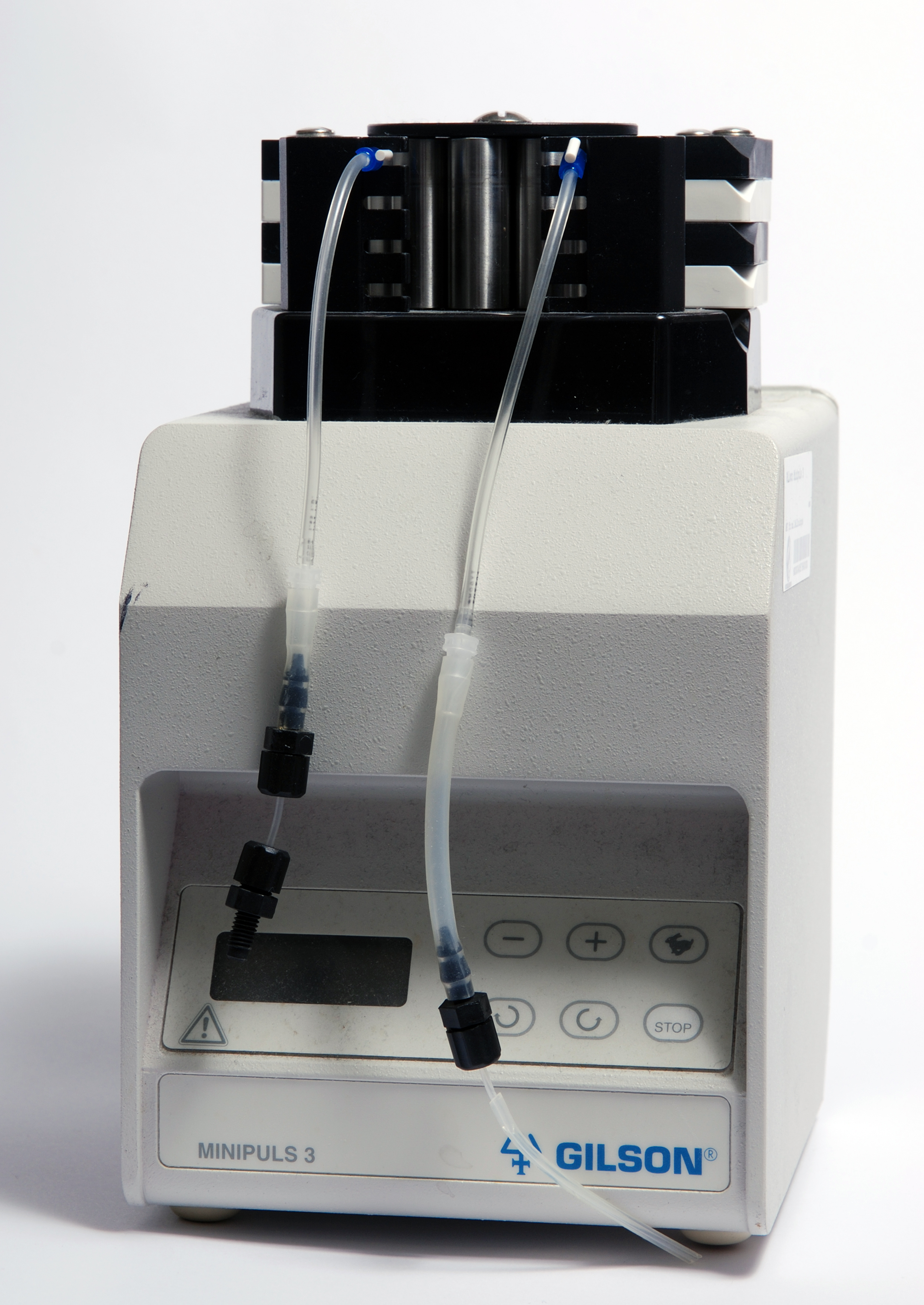
Disclosure: We may earn a commission if you purchase through links on this page, at no additional cost to you.
Sodium hypochlorite is exactly the kind of chemical that exposes weak tubing choices.
A peristaltic pump is attractive for bleach dosing because the chemical stays inside the tube rather than contacting valves, seals or a pump chamber. But that advantage only holds if the tube itself is compatible with the concentration, temperature, pressure and duty cycle.
The practical selection question is not:
Which tubing material is “bleach resistant”?
It is:
Which exact tubing formulation fits this pump head and remains mechanically usable at the actual sodium-hypochlorite concentration and operating condition?
Decision Summary
For sodium hypochlorite service, start with concentration and the pump manufacturer's approved tubing family. Long-life thermoplastic elastomer formulations designed for oxidizing chemicals are usually a stronger starting point than generic hose. Do not assume that all silicone, all Norprene-type tubing or all “chemical-resistant” tubing performs the same. Confirm the exact grade, ID, OD, wall thickness, pressure condition and replacement interval before ordering.
Why Sodium Hypochlorite Is a Good Peristaltic-Pump Application
Sodium hypochlorite is widely dosed in water treatment, sanitation and process cleaning.
It also has two characteristics that make chemical-feed equipment selection important.
First, it is an oxidizing chemical. Tubing compatibility therefore depends on the exact polymer formulation, not just whether the product is described as “rubber” or “silicone.”
Second, hypochlorite solutions can release gas during storage and service. Operators commonly report gas pockets, loss of prime and unstable feed when concentrated bleach sits in long suction lines or warm day tanks.
Peristaltic pumps avoid check valves in the wetted path and can tolerate some gas better than many conventional metering-pump arrangements. Blue-White specifically positions several FLEXFLO peristaltic models for sodium-hypochlorite feed because of this off-gassing behavior.
That does not remove the tubing decision. It makes tubing the central replaceable component.
Start With Concentration, Not the Chemical Name
“Bleach” is not one operating condition.
A dilute cleaning solution and a 12.5% water-treatment feed are different services.
Record:
Chemical: Sodium hypochlorite
Concentration:
Solution temperature:
Storage temperature:
Pump speed:
Continuous or intermittent duty:
Discharge pressure:
Suction lift / flooded suction:
Tube size:
Pump-head model:
Compatibility tables should be read against the closest relevant concentration.
For example, current manufacturer data from Blue-White lists its Flex-A-Prene tubing for sodium hypochlorite service in the 12.5–15% range and related product documentation references higher-concentration hypochlorite compatibility for specific tube formulations. Watson-Marlow describes Marprene as highly resistant to oxidizing agents including sodium hypochlorite.
Those are formulation-specific manufacturer claims. They should not be generalized to every TPE, silicone or black peristaltic tube.
Why Generic Silicone Is a Weak Default
Silicone is common in laboratory peristaltic pumps because it is flexible, easy to see through and available in many dimensions.
That does not make generic silicone the automatic choice for bleach dosing.
Chemical-resistance references for silicone and hypochlorite are inconsistent because performance depends heavily on formulation, concentration, temperature and test method. Some commercial charts rate certain silicone tubing for dilute hypochlorite; others provide no rating or prefer long-life TPE formulations for oxidizing service.
Peer-reviewed materials research also shows why concentration matters. Sodium hypochlorite is capable of oxidizing silicone-based systems, and higher bleach concentration can accelerate changes in mechanical properties in susceptible silicone formulations.
The procurement lesson is simple:
Do not buy “food-grade silicone tube” for chlorine dosing unless the exact tubing grade has an applicable compatibility statement and the pump head accepts its dimensions.
Transparency is useful, but it is not a chemical-resistance specification.
PharMed BPT and Similar Long-Life TPE Tubing
PharMed BPT is a long-life thermoplastic elastomer designed for repeated peristaltic flexing.
Saint-Gobain describes the formulation as resistant to acids, alkalis and oxidative agents, and current third-party compatibility tables derived from manufacturer data rate PharMed BPT highly for common sodium-hypochlorite concentrations.
That makes BPT-type tubing a rational candidate when a buyer needs:
- frequent roller compression;
- chemical resistance;
- low gas permeability relative to standard silicone;
- longer service intervals;
- controlled dimensions;
- repeat replacement purchasing.
But material identity still needs to be verified.
A marketplace title containing “BPT” or “PharMed” is not enough. Ask whether the offered material is genuine branded tubing, a compatible generic formulation, or simply a supplier's descriptive label.
For maintenance planning, that difference matters because flex life, hardness, documentation and dimensional tolerance can change.
Norprene, Marprene and Other Oxidizer-Resistant TPEs
Long-life TPE tubing appears frequently in chemical-feed applications.
Watson-Marlow specifically identifies Marprene as resistant to sodium hypochlorite and other oxidizing agents. Masterflex has also published Norprene-based application examples for sodium-hypochlorite dosing.
These examples demonstrate the value of the material family, but they do not make all TPE tubing interchangeable.
Check:
Exact trade name / formulation
Pump-head compatibility
Tube number
ID
OD
Wall thickness
Hardness
Published hypochlorite concentration
Temperature
Continuous pressure
Recommended service interval
A tube can be chemically compatible and still be mechanically wrong for the pump head.
Related guide: Peristaltic Pump Tubing Size Guide: ID, OD, Wall Thickness & Tube Numbers
Off-Gassing Changes the System Even When the Tube Is Compatible
Chemical compatibility is only one part of reliable chlorine dosing.
Operators using 12.5% sodium hypochlorite frequently report gas accumulation in suction or discharge lines. That observation appears repeatedly in current water-treatment discussions, especially after overnight shutdown or in long chemical-feed lines.
Gas can create symptoms that look like tubing failure:
- inconsistent feed rate;
- loss of prime;
- large air gaps;
- delayed chlorine response;
- sudden recovery after bleeding the line.
Do not replace tubing solely because the process has gas pockets.
Inspect the complete feed arrangement:
Day-tank temperature
Suction-line length
Pump elevation
High points in tubing
Injection pressure
Tube condition
Check-valve / injection-quill condition
Actual pump output
If the same tube performs normally after gas is removed, the primary problem may be system layout or hypochlorite decomposition rather than material incompatibility.
Temperature and Light Can Change the Dosing Problem
Tubing selection cannot be separated completely from hypochlorite storage.
Authoritative chemical-safety data notes that sodium hypochlorite decomposes under heat and light. Industrial hypochlorite guidance also identifies temperature, concentration and metal contamination as factors that can accelerate decomposition and oxygen formation.
For the pump system, that means a warm chemical room or sun-exposed day tank can increase gas generation even when the tubing itself is chemically compatible.
If a dosing system becomes less stable during hot periods, inspect storage and feed conditions before assuming that the replacement tube is defective. A better tube will not correct avoidable hypochlorite decomposition upstream of the pump.
Replacement Interval Should Be Shorter Than Catastrophic Failure
Bleach-feed tubing is a wear component exposed to both mechanical cycling and chemical stress.
Waiting for rupture is poor maintenance practice when a tube failure can release oxidizer inside the pump enclosure or interrupt disinfection.
Use condition-based triggers such as:
- flow drift;
- permanent flattening;
- loss of rebound;
- surface cracking;
- discoloration or hardening;
- pinholes;
- visible wetness around the pump head;
- repeated recalibration;
- loss of prime that follows the tube rather than the system.
Then add scheduled replacement based on operating history.
A useful record is:
Tube grade
Tube size
Installation date
Pump hours
Average RPM
NaOCl concentration
Solution temperature
Discharge pressure
Measured flow
Removal date
Removal reason
Observed tube condition
After several comparable cycles, the plant can replace tubing before the common wear point rather than reacting to failures.
Related guide: When to Replace Peristaltic Pump Tubing: Wear, Flow Drift & Preventive Replacement
Chemical Compatibility Does Not Replace Pump-Head Compatibility
A buyer can select the right polymer and still order the wrong tube.
Peristaltic pumps depend on controlled occlusion. The roller compresses the tube wall against the pump housing, so ID alone is not enough.
Confirm:
- ID;
- OD;
- wall thickness;
- tube number;
- hardness;
- approved pump-head range.
If a replacement tube is too thin, the pump may not fully occlude it.
If it is too thick or too stiff, roller load and tube fatigue can increase.
This is why industrial chlorine-feed pumps often use specific tube assemblies rather than generic cut hose.
Related guide: How to Choose Replacement Tubing for a Peristaltic Pump
What to Ask a Supplier Before Buying Bleach-Dosing Tubing
A professional RFQ should not say only:
“Need chemical-resistant peristaltic tube.”
Send:
1. Sodium hypochlorite concentration
2. Normal and maximum solution temperature
3. Pump brand / model
4. Pump-head model
5. Required ID × OD × wall thickness
6. Tube number if applicable
7. Target flow
8. Continuous or intermittent service
9. Suction condition
10. Discharge pressure
11. Required material / accepted alternatives
12. Published NaOCl compatibility data
13. Tubing-life test conditions
14. MOQ and available cut lengths
15. Lot / material documentation required
16. Sample length required before bulk order
If the supplier cannot identify the exact polymer grade or provide any basis for the hypochlorite claim, classify the product as VERIFY, not approved.
Current Alibaba Product Candidates
This article has a clear Affiliate Opportunity because the search intent ends in a recurring replacement purchase.
However, sodium-hypochlorite service is more demanding than a generic tubing article, so only products with a defensible material route should be considered.
Candidate 1 — Saint-Gobain PharMed BPT listing
A current Alibaba listing from Baoding Landto advertises imported Saint-Gobain PharMed BPT peristaltic tubing, described as long-life and corrosion resistant.
Product ID: 1601774141927
Current listing snapshot:
Material route: PharMed BPT
MOQ: 1
Displayed price range: approximately $16.20–30.60
Supplier: Baoding Landto Electronic Technology Co., Ltd.
Role: low-MOQ branded-material candidate for sampling and replacement validation.
Why it fits: the article is specifically about chemical-resistant replacement tubing, and PharMed BPT has a stronger published oxidizer-resistance basis than generic marketplace silicone.
Risk: the exact size, authenticity, current material documentation and sodium-hypochlorite concentration must still be confirmed before bulk use.
Affiliate status: CPS URL supplied by the site owner on 2026-09-21. Product-role mapping recorded in the same order as the validated candidate list; independent landing verification remains pending.
Candidate 2 — JIHPUMP Tygon A-60-F
A current Alibaba listing from Chongqing Jieheng advertises Tygon A-60-F peristaltic tubing.
Product ID: 62041121415
Current listing snapshot:
Material route: Tygon A-60-F
MOQ: 1 meter
Displayed price: about $5 per meter
Purchase path: Ready to Ship / inquiry shown
Lead Fluid's current A-60-F technical page specifically lists sodium hypochlorite among compatible oxidizing agents for that formulation.
Role: lower-cost oxidizer-resistant TPE candidate.
Risk: verify that the Alibaba listing is the same A-60-F formulation described in the technical compatibility source, and confirm dimensions for the target pump head.
Affiliate status: CPS URL supplied by the site owner on 2026-09-21. Product-role mapping recorded in the same order as the validated candidate list; independent landing verification remains pending.
Buyer Check: Do not substitute either candidate solely from the product title. Confirm the exact material grade, tube dimensions, concentration compatibility and pump-head fit first.
Common Buying Mistakes
Buying generic “chemical-resistant” tubing
That phrase is too broad. Ask what chemical, what concentration and what temperature the claim covers.
Assuming all black TPE tubing is Norprene-equivalent
Color does not identify formulation.
Choosing silicone because the existing tube was clear
Visual similarity does not prove the same material or service life.
Ignoring off-gassing
Gas accumulation can create unstable dosing even when the tubing material is acceptable.
Ordering bulk before sample validation
For a new supplier or formulation, validate fit, flow and chemical exposure before committing to large quantities.
Frequently Asked Questions
Is silicone tubing suitable for sodium hypochlorite?
Some specific silicone formulations may be suitable at defined concentrations, but generic silicone should not be treated as universally bleach resistant. Use formulation-specific compatibility data.
What tubing is commonly used for 12.5% sodium hypochlorite?
Chemical-feed manufacturers commonly specify long-life TPE formulations designed for oxidizing service. The exact product must also match the pump head.
Why does my chlorine dosing line keep filling with gas?
Sodium hypochlorite can off-gas during storage and service. Temperature, concentration, suction-line geometry and long shutdown periods can all contribute. Gas in the line is not automatically evidence of tube failure.
How often should bleach-dosing tubing be replaced?
There is no universal interval. Use the pump manufacturer's starting recommendation, then build a site-specific interval from operating hours, concentration, pressure, flow drift and observed wear.
Can I buy replacement tubing by ID only?
No. Confirm ID, OD and wall thickness as well as material and pump-head compatibility.
Final Takeaway
Sodium-hypochlorite dosing is a strong example of why peristaltic tubing should be treated as a specified replacement component, not generic hose.
The correct sequence is:
NaOCl concentration → exact tubing formulation → pump-head fit → dimensions → pressure / temperature → off-gassing behavior → replacement interval → supplier validation
For a repeat-use chlorine-dosing system, that specification should be saved and reused every time tubing is purchased.
That is the commercial value of this Single Point: the same professional buyer repeatedly needs the correct replacement tube, and a defensible specification makes each future purchase faster, safer and easier to compare.
Share this article