How to Choose Replacement Tubing for a Peristaltic Pump
Replacement peristaltic-pump tubing must match the pump head mechanically and the process chemically. This guide explains how to specify ID, OD, wall thickness, material, pressure, service life and documentation before ordering.
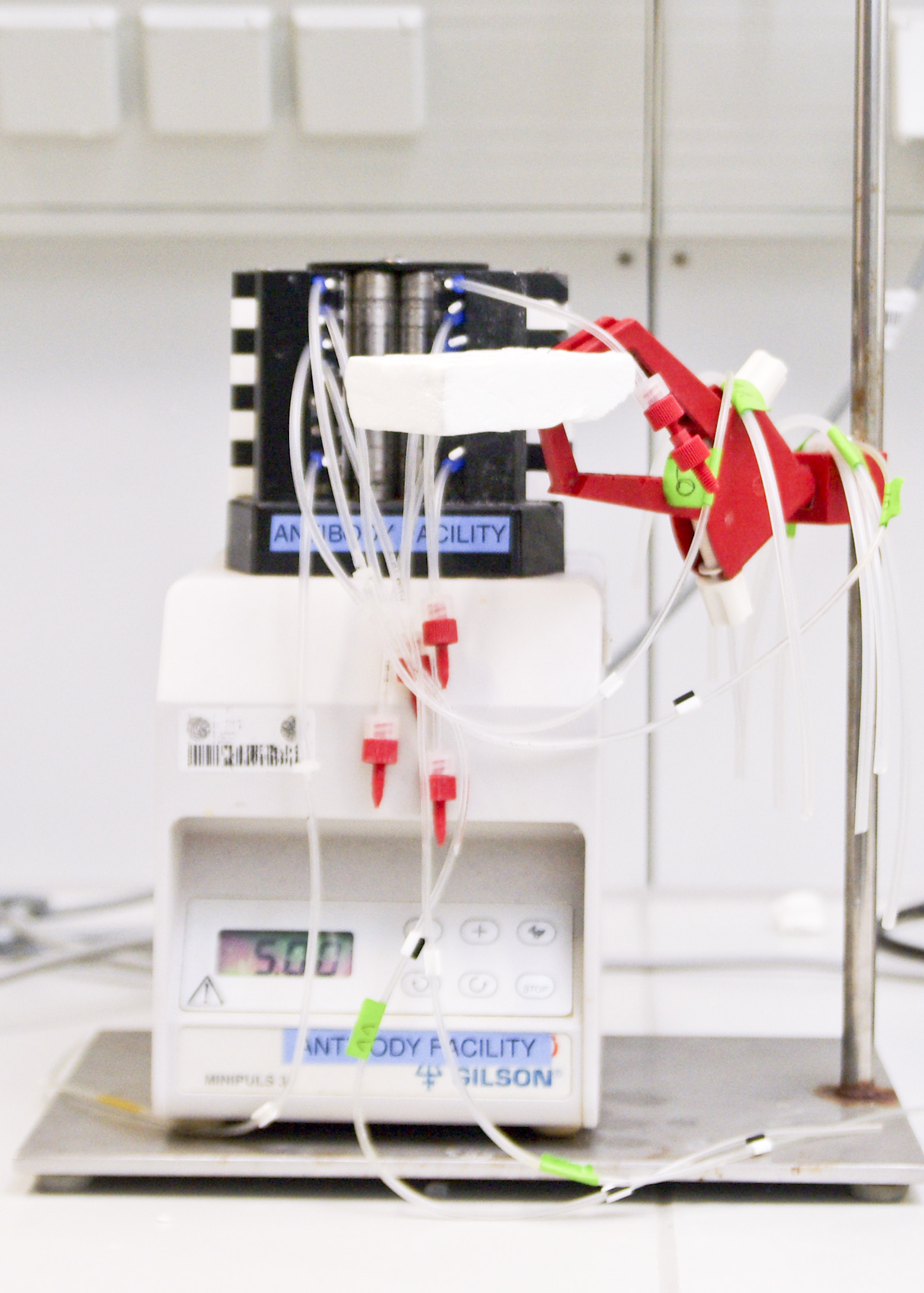
Disclosure: We may earn a commission if you purchase through links on this page, at no additional cost to you.
Replacing peristaltic-pump tubing is not the same as buying ordinary flexible hose.
In a peristaltic pump, the tubing is simultaneously the fluid path, the sealing element and the component repeatedly compressed by the rollers. A tube can have the correct inner diameter and still perform badly if its outer diameter, wall thickness, hardness or compression recovery does not match the pump head.
For a replacement purchase, the safest sequence is:
identify the pump head → confirm the existing tubing dimensions → screen the material against the fluid → check temperature and pressure → define service-life and documentation requirements → only then compare suppliers.
That order prevents the most common sourcing mistake: choosing a tube by material name or bore size while ignoring the mechanical fit that actually allows the pump to work.
Decision Summary
Do not buy replacement tubing from ID alone. Record the pump and pump-head model, original tubing part number if available, ID, OD, wall thickness, material, operating fluid, concentration, temperature, pressure or suction condition, target flow and required documentation. If you change supplier or material, treat the replacement as a new component that needs fit and process validation.
Why Peristaltic Tubing Is a Wear Component
A peristaltic pump moves liquid by occluding flexible tubing between a roller and the pump housing. As the roller advances, the tube closes and then recovers its shape behind the roller.
That repeated deformation makes the tube fundamentally different from static transfer tubing.
The replacement interval depends on more than visible cracking. Relevant changes can include:
- loss of elastic recovery;
- permanent flattening;
- flow drift;
- surface wear;
- particulate shedding;
- swelling or hardening from chemical exposure;
- leakage;
- failure to maintain occlusion.
Masterflex technical data, currently published through Avantor/VWR, defines tubing-life testing using either physical failure or a reduction to 50% of initial flow, whichever occurs first, under the manufacturer’s stated test conditions. That is a useful reminder that a tube can become unsuitable before it splits.
Do not convert a manufacturer life-test number into a universal replacement interval. Pump speed, occlusion, fluid, temperature, pressure and installation all change service life.
Step 1: Identify the Pump Head Before the Tubing
Start with the equipment, not the hose catalog.
Record:
Pump brand:
Pump model:
Pump-head model:
Original tubing part number:
Current tube number, if marked:
Pump-head geometry determines how the tube is compressed. Manufacturer guides repeatedly specify approved tubing families and sizes because roller gap, occlusion and retention are designed around particular dimensions.
A tube that physically fits into the head can still be wrong.
Too little wall thickness can prevent full occlusion, causing weak suction, backflow or poor repeatability. Excessive wall thickness can increase roller load and accelerate tube fatigue.
If the original tubing part number is known, use it as the starting reference even when sourcing an alternative supplier.
Step 2: Measure ID, OD and Wall Thickness
Three dimensions matter:
ID — inner diameter
Controls the fluid passage and strongly influences displacement per revolution.
OD — outer diameter
Determines how the complete tube fits in the pump head, guides and retainers.
Wall thickness
Determines how much elastomer the roller must compress.
The basic relationship is:
Wall thickness = (OD − ID) / 2
Common tube-number families such as #13, #14, #16, #25 and #17 are convenient references, but they should not replace dimensional confirmation when changing suppliers.
For example, two nominal pump tubes can share a similar ID but use different wall constructions. The pump sees those as different components because the roller compresses the wall, not just the fluid passage.
When measuring an existing tube, measure a section that has not spent its life under the rollers. A worn section may be flattened and no longer represent the original OD or wall geometry.
Step 3: Do Not Select Material From a Generic “Best Tubing” List
There is no universally best peristaltic tubing material.
Common families include:
- silicone;
- platinum-cured silicone;
- PharMed-type thermoplastic elastomers;
- Norprene-type tubing;
- PVC/Tygon formulations;
- fluoroelastomer tubing;
- application-specific lined or multilayer tubing.
The correct choice depends on the process.
A practical material screen should include:
| Requirement | What to verify |
|---|---|
| Chemical exposure | Fluid, concentration, contact time |
| Temperature | Normal and cleaning/sterilization temperature |
| Mechanical life | Continuous vs intermittent duty, pump speed |
| Pressure | Discharge pressure and suction condition |
| Fluid integrity | Extractables, adsorption, particles, permeability |
| Sterilization | Autoclave, gamma, EtO, CIP/SIP as applicable |
| Visibility | Whether transparent tubing is operationally useful |
| Documentation | Food, medical, bioprocess or internal QA requirements |
Material-family names are not enough. Different formulations sold under the same broad polymer category can have different hardness, additives, extractables and pumping life.
Step 4: Check Chemical Compatibility at the Real Process Condition
Chemical compatibility is not a one-word property.
Record the actual:
Fluid:
Concentration:
Temperature:
Exposure duration:
Cleaning fluid:
Cleaning temperature:
A compatibility table is a screening tool, not a substitute for application testing.
Grayline’s current peristaltic-tubing guide explicitly warns that material-family chemical ratings are generalized and recommends evaluation under actual conditions. Masterflex guidance similarly treats compatibility as dependent on the fluid and operating environment.
Look for more than catastrophic dissolution.
Chemical attack can appear as:
- swelling;
- softening;
- hardening;
- embrittlement;
- loss of compression recovery;
- changes in dimensions;
- increased extractables;
- reduced service life.
A replacement that survives static immersion may still perform poorly under continuous roller compression.
Step 5: Treat Silicone, PharMed-Type and Norprene-Type Tubing as Different Trade-Offs
Silicone is widely used because it is flexible, available in many sizes and compatible with many general laboratory and bioprocess applications. Platinum-cured grades are often selected where biocompatibility, extractables or process documentation matter.
Long-life thermoplastic elastomer tubing is often chosen when extended flex life or lower gas permeability matters more than optical clarity.
Masterflex life-test guidance states that Norprene and PharMed formulations perform strongly in applications where the fluid is chemically compatible. Saint-Gobain’s PharMed BPT documentation also markets that specific formulation for extended flex life, repeated sterilization and bioprocess service.
Those are formulation-specific claims, not permission to substitute one tube for another without confirming pump-head fit and chemical compatibility.
For solvents, oils or aggressive chemicals, do not assume ordinary silicone is suitable merely because it is sold as “pump tubing.”
Step 6: Include Pressure and Suction Conditions
Peristaltic-pump tubing must repeatedly reopen after the roller passes.
That matters on the suction side. A tube with poor recovery can remain partially flattened and reduce inlet flow.
On the discharge side, backpressure adds mechanical stress.
Pharmaceutical Technology’s tubing-selection guidance uses the STAMP framework—size, temperature, application, media and pressure—and notes that both positive pressure and vacuum must be considered.
Ask the supplier for pressure information under conditions relevant to the selected size and material.
Do not assume a pressure rating from another wall thickness or another formulation applies to your replacement.
Step 7: Decide Whether Flow Recalibration Is Required
Replacing the tube can change flow even when the nominal size is unchanged.
Reasons include:
- dimensional tolerance;
- different wall stiffness;
- different compression set;
- different occlusion;
- installation tension;
- new-tube recovery compared with worn tubing.
For dosing and metering systems, recalibrate after tubing replacement.
This is especially important when switching supplier, material formulation or tube-number family.
A replacement project should therefore specify both mechanical interchangeability and acceptable process performance. “It fits the pump head” is only the first test.
Step 8: Define the Replacement Trigger
Do not wait for leakage if loss of flow accuracy matters.
Useful replacement triggers can include:
- operating hours;
- measured flow drift;
- visible flattening;
- surface cracks;
- wall thinning;
- loss of suction performance;
- repeated recalibration;
- product-change requirements;
- validated single-use restrictions.
For critical processes, record installation date, batch or lot number and replacement date.
The correct replacement interval is application-specific. A laboratory water-transfer pump and a continuously operated process-dosing pump should not inherit the same schedule simply because they use the same nominal tube size.
Step 9: Documentation Matters in Food, Medical and Bioprocess Applications
Do not treat “food grade,” “medical grade” or “USP Class VI” as interchangeable marketing terms.
For repeated-use food-contact rubber articles in the United States, 21 CFR 177.2600 defines requirements for eligible rubber articles and extractives under specified conditions.
For medical-device biological evaluation, ISO 10993-1:2025 establishes a risk-management framework for biological safety. A supplier claiming ISO 10993 compliance should be able to identify the applicable tests and provide supporting documentation relevant to the finished tubing.
For bioprocess tubing, buyers may also require:
- lot traceability;
- certificate of analysis or conformity;
- extractables/leachables information;
- sterilization validation;
- change-control notification;
- animal-derived-component statements.
Request the documents needed by your process. Do not infer compliance from the polymer name alone.
What to Send a Supplier Before Asking for a Quote
A useful RFQ is specific enough that the supplier does not have to guess the application.
Send:
1. Pump brand and model
2. Pump-head model
3. Original tubing part number
4. Tube number, if applicable
5. ID × OD × wall thickness
6. Required material / acceptable alternatives
7. Fluid and concentration
8. Operating temperature
9. Cleaning / sterilization conditions
10. Suction and discharge pressure conditions
11. Target flow range
12. Continuous or intermittent duty
13. Required length / cut length
14. Quantity
15. Regulatory / validation documents required
16. Sample requirement before bulk order
For a supplier change, ask whether dimensional tolerances are controlled specifically for peristaltic-pump service rather than assuming ordinary extrusion tolerance is sufficient.
Current Alibaba Candidates for This Buying Intent
The following listings are useful because they represent different sourcing roles. They still require current listing and CPS verification before publication.
Standard tube-number silicone — bulk replacement
A current Dongguan Ruixiang listing advertises silicone peristaltic tubing in common numbered sizes including #13, #14, #15, #16, #17, #18, #19, #24 and #25. The Alibaba category page showed a 50 m MOQ at the latest check.
Use this type of offer when the buyer already knows the required dimension and needs repeat or bulk replacement tubing.
Low-MOQ silicone — sampling or maintenance replacement
A current Kamoer listing advertises food-grade silicone rubber tubing for peristaltic-pump use and showed a 1 m MOQ at the latest check.
A low-MOQ listing is more useful when a buyer needs a trial length before approving a larger replacement order.
Norprene-type tubing — long-life alternative candidate
A current JIHPUMP listing advertises Norprene Tygon A-60-G tubing for peristaltic-pump use and showed a 1 m MOQ.
This is a different material route from silicone and should be evaluated on the exact grade, dimensions, pump-head fit and process compatibility rather than treated as a drop-in upgrade.
Buyer Check: Marketplace titles and MOQ are dynamic. Before ordering, verify the exact material grade, dimensions, hardness, documentation, current MOQ and whether the offered tube is approved or validated for your pump head.
Common Replacement Mistakes
Buying by ID only
ID does not define wall thickness or pump-head fit.
Assuming tube numbers are universal
Use the number as a reference, then confirm dimensions and the pump manufacturer’s compatibility information.
Selecting material only by chemical-resistance chart
Compatibility under static exposure does not prove acceptable flex life under repeated compression.
Buying “food grade” without documentation
Ask which regulation or test supports the claim and whether it applies to the finished tubing.
Replacing tubing without recalibration
For dosing work, a new tube can change delivered volume.
Ordering bulk before testing a supplier change
When the process is sensitive, verify fit, flow, chemical exposure and service behavior on a sample length first.
Frequently Asked Questions
Can I replace peristaltic-pump tubing with ordinary silicone hose?
Only if the tubing dimensions, mechanical properties and pump-head requirements are confirmed. A flexible hose that fits physically is not automatically suitable for repeated occlusion.
Is ID the most important tubing dimension?
ID strongly affects flow, but replacement fit also depends on OD and wall thickness. All three should be specified.
Should I choose the longest-life tubing available?
Not automatically. Long flex life has little value if the material is chemically incompatible, unsuitable for the pump head or lacks required process documentation.
When should peristaltic tubing be replaced?
Use process-specific criteria such as operating hours, flow drift, flattening, cracking, suction loss or validated maintenance intervals. Do not wait for rupture when accuracy or contamination risk matters.
Can I change from silicone to Norprene or PharMed-type tubing?
Potentially, but treat it as a material and mechanical change. Confirm chemical compatibility, dimensions, wall construction, pump-head approval and resulting flow performance.
Final Takeaway
Replacement peristaltic-pump tubing should be specified as a pumping component, not as generic hose.
Start with the pump head. Confirm ID, OD and wall thickness. Then screen material against the actual fluid, concentration, temperature, pressure, duty cycle and documentation requirements.
For repeat purchasing, standardize the specification so every supplier quote answers the same questions.
The core replacement sequence is:
pump head → dimensions → material → chemical compatibility → temperature/pressure → service life → documentation → sample validation → supplier order
That sequence makes tubing procurement repeatable and gives the buyer a defensible way to compare OEM tubing, equivalent replacements and bulk suppliers without relying on material names or marketplace titles alone.
Share this article