How to Choose a Wireless Soil Sensor Network for Large Field Monitoring
A wireless soil monitoring project fails more often at the system boundary than at the sensing element. This guide covers radio and coverage planning, battery and reporting policy, gateway and backhaul, data ownership and a pilot test.
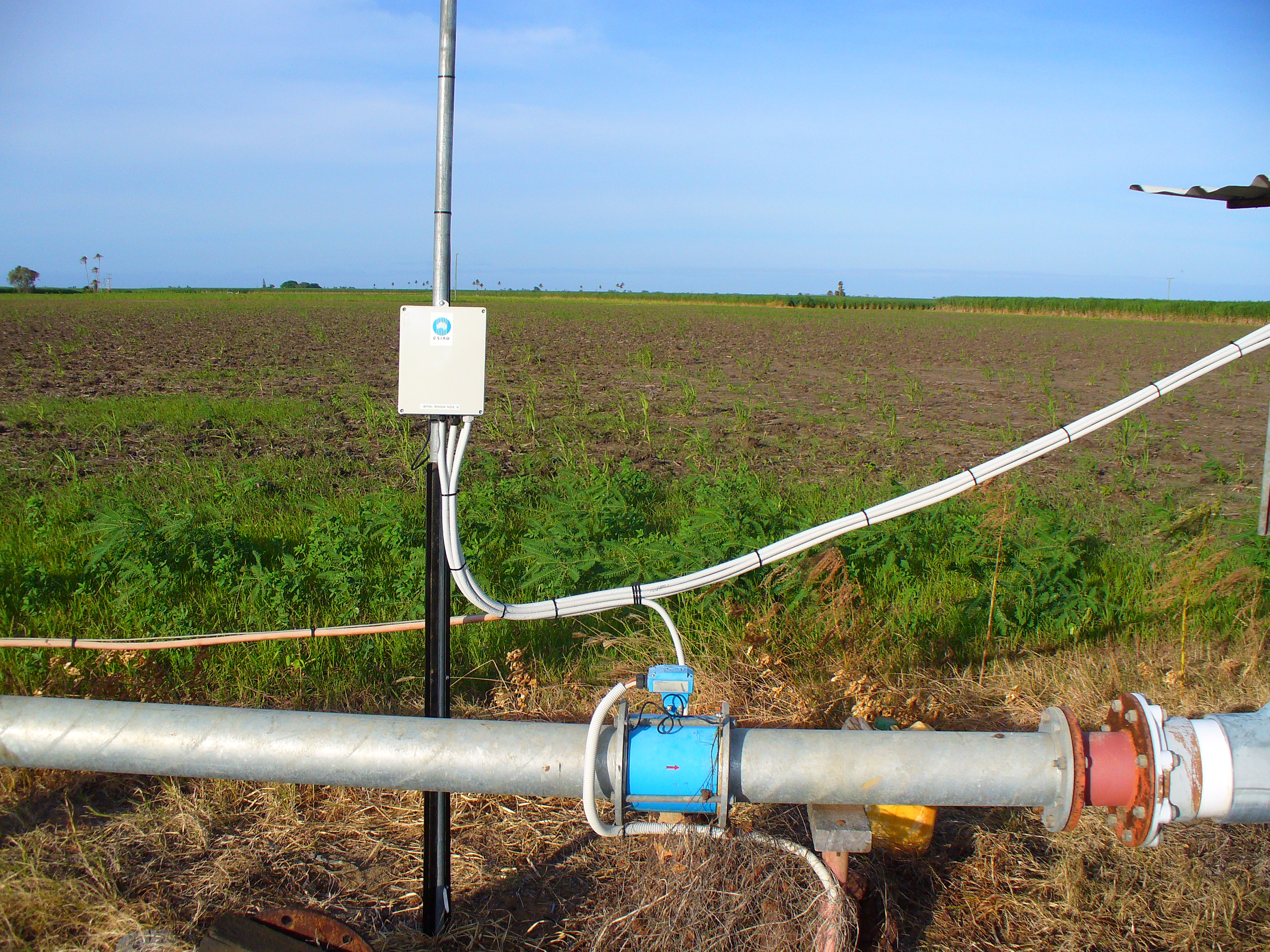
Disclosure: We may earn a commission if you purchase through links on this page, at no additional cost to you.
A wireless soil monitoring project fails more often at the system boundary than at the sensing element. A node may report a plausible moisture value, yet the project still fails if the radio plan, gateway location, battery budget, data format or maintenance route was never specified. For a large field, select the network as a chain: sensing node, radio, gateway, backhaul, platform and field-service procedure.
This guide covers remote monitoring for farms, orchards, greenhouses and drought or irrigation studies. It is deliberately different from the soil moisture sensor selection guide, which focuses on the measurement and installation of a single probe. Here the central buyer question is whether readings can arrive reliably from distributed points without creating an unmanageable power and service burden.
Define the deployment before choosing a radio
| Deployment condition | Network priority | Failure to avoid |
|---|---|---|
| Several nodes across open fields | LoRaWAN range, gateway height, link budget and reporting interval | Assuming advertised kilometres apply through crops, terrain and wet soil |
| Remote plots with no reliable mains | Battery chemistry, sleep current, solar option and service interval | Choosing a high-data-rate modem that drains the battery during every report |
| Greenhouse blocks or dense farms | Gateway placement, channel plan and interference management | Treating an indoor or metal-framed structure like an open field |
| Integration with farm SCADA or cloud | Payload format, API/export, timestamps and alarm ownership | Buying a sensor whose data can only be viewed in a locked app |
The decisions that determine total cost
Coverage is a design calculation, not a catalogue promise
LoRa and LoRaWAN can be effective for small payloads sent at intervals, but coverage depends on antenna height, regional band, spreading factor, obstructions, gateway sensitivity, soil and weather conditions. Ask the supplier for the radio band, maximum transmit power, antenna type, expected reporting interval and a link-budget or field-test method. A claimed range is not a substitute for a site survey.
Battery life depends on the reporting policy
Battery life is a function of measurement frequency, uplink frequency, retransmissions, radio settings, temperature and sensor warm-up current. Request battery capacity, chemistry, replaceability, low-battery payload, sleep current and an estimated life at the intended reporting schedule. “Ten years” without a duty cycle is not a usable procurement specification.
Gateway and backhaul are separate from the node
A LoRaWAN node normally needs a gateway and network server. A 4G or Wi-Fi device may include backhaul but still needs coverage, a SIM or local network and a data plan. Confirm whether the quoted offer includes a gateway, antenna, power supply, server access, device activation and the right regional frequency plan. Treat these as line items in the RFQ rather than assuming they are bundled.
Data ownership and failure handling
The buyer should be able to export raw readings with timestamps, device identifiers, battery status and signal information. Ask what happens when a gateway is offline, whether readings are buffered locally, how duplicate packets are handled and how a missing node is distinguished from a stable dry reading. A dashboard that hides radio and battery health is not enough for an unattended field system.
Two sourcing candidates with different network roles
These marketplace offers are sourcing candidates. Their stated radio, battery and multi-parameter claims require exact variant confirmation and a site trial.
Candidate — HONDETEC RD-T-SS-04
Candidate — Manorshi 8-in-1 integrated soil sensor
RFQ questions for a field-ready wireless system
- Which radio protocol and regional frequency plan are included in the quoted model?
- Is a gateway included? If not, which gateways and network servers are supported?
- What reporting interval, payload size, retransmission policy and battery life were used for the quoted life estimate?
- Does the node buffer measurements during gateway or backhaul outages? For how long?
- Can the buyer export raw readings, timestamps, battery voltage, RSSI/SNR and device alarms?
- What are the antenna, enclosure, cable and solar-panel installation requirements?
- Which sensor channels are factory-calibrated, and can the supplier provide a sample payload and register map?
- What is the replacement process for batteries, probes, gateways and SIM or cloud subscriptions?
A pilot test that exposes network weaknesses
Start with a small deployment at the farthest and most obstructed points, not only beside the gateway. Run the intended measurement and reporting schedule for at least one representative irrigation cycle. Record packet delivery, RSSI/SNR, battery change, gateway uptime, timestamps and missing-data recovery. Deliberately interrupt the backhaul and confirm whether nodes buffer data and whether the platform marks the outage rather than filling the gap with a flat line.
Only after the pilot should the buyer set the final node spacing, gateway height, reporting interval and alarm rules. A network that delivers fewer, well-contextualized readings can be more useful than a high-frequency system that cannot sustain its battery or backhaul plan.
Bottom line
Choose wireless soil monitoring as an infrastructure project, not a sensor accessory. HONDETEC is a sourcing lead for buyers comparing LoRa/LoRaWAN with GPRS or 4G and solar options. Manorshi is a lead for a wired or gateway-connected multi-parameter node using RS485/SDI-12. Both require a variant-specific RFQ, gateway and platform confirmation, and a field pilot before they should be treated as deployment-ready.
Evidence and source notes
- E1 — LoRa Alliance, LoRaWAN technical overview: https://lora-alliance.org/about-lorawan/
- E2 — Alibaba listing, HONDETEC RD-T-SS-04, Product ID 1600181192319: https://www.alibaba.com/product-introduction/RS485-Digital-Lora-Lorawan-GPRS-4G_1600181192319.html
- E3 — Alibaba listing, Manorshi 8-in-1 LoRa/LoRaWAN, Product ID 1600918252304: https://www.alibaba.com/product-detail/8-in-1-LoRa-LoRaWAN-Integrated_1600918252304.html
- E4 — HONDETEC supplier host resolved from CPS: https://hondetec.m.en.alibaba.com/
- E5 — Manorshi supplier host resolved from CPS: https://manorshi.m.en.alibaba.com/
Share this article