Peristaltic Pump Tubing for Sodium Hydroxide: 10–50% Caustic Soda Material Guide
Sodium hydroxide concentration changes the tubing decision. This guide explains how to select peristaltic-pump tubing for 10%, 25–40% and 50% caustic soda service, including Norprene A-60-G, PharMed BPT and dedicated chemical-feed tubing.
Disclosure: We may earn a commission if you purchase through links on this page, at no additional cost to you.
Sodium hydroxide is a strong alkali used in water treatment, pH adjustment, cleaning, food processing, pulp and paper, chemical manufacturing and many other dosing systems.
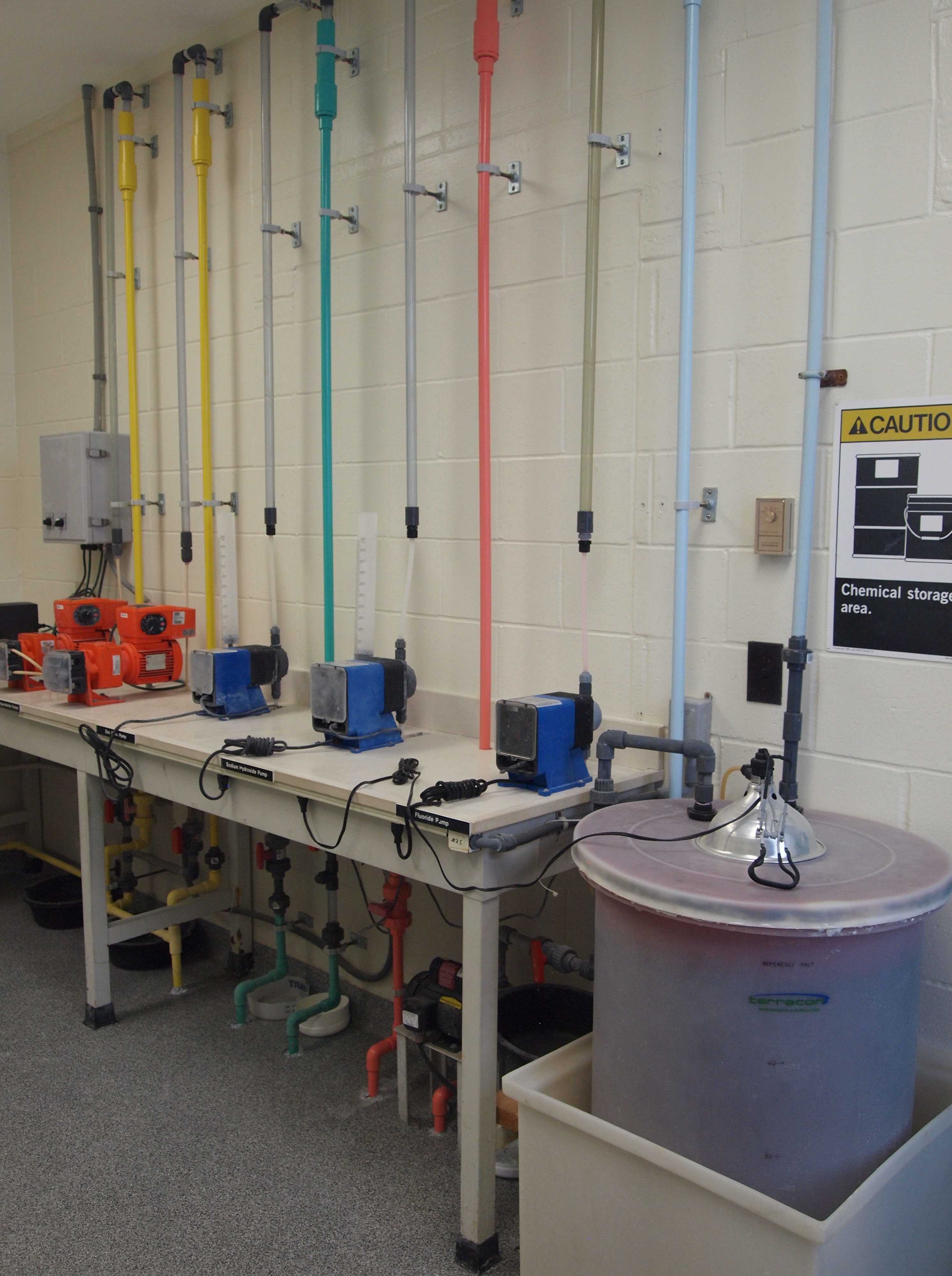
Peristaltic pumps are attractive for caustic service because the liquid stays inside the tube. There are no wetted pump seals or check valves inside the pump head.
But that advantage makes the tube the critical replacement component.
The correct question is not:
Which rubber is resistant to sodium hydroxide?
It is:
Which exact pump-tubing formulation is suitable for this NaOH concentration, at this temperature and duty cycle, in this pump head?
A tube suitable for 10% caustic is not automatically approved for 50% sodium hydroxide.
Decision Summary
Start with concentration. For dilute-to-medium sodium hydroxide, dedicated peristaltic TPE tubing such as Norprene/Tygon A-60-G and some PharMed BPT applications can be reasonable candidates when supported by concentration-specific compatibility data. For 50% NaOH, use tubing explicitly rated by the pump or tubing manufacturer for 50% caustic service; do not extrapolate from a 10% or “medium concentration” rating. In every case, verify ID, OD, wall thickness, pump-head fit, temperature, pressure and replacement interval before bulk purchasing.
Affiliate disclosure: Some links in this guide are affiliate links. If you use them to place an eligible Alibaba order, Equipvia may earn a commission at no additional cost to you. Affiliate status does not determine the technical conclusions in this guide.
Concentration Is the First Specification
“Caustic soda” is not one service condition.
Professional systems commonly encounter:
5–10% NaOH cleaning solution
20–25% NaOH process solution
30–40% NaOH chemical dosing
50% commercial sodium hydroxide
These concentrations should not share one automatic tubing recommendation.
Record:
NaOH concentration by weight
Solution temperature
Ambient temperature
Continuous or intermittent duty
Pump speed
Discharge pressure
Suction condition
Required flow
Pump-head model
Required service life
This becomes the minimum information a supplier needs before recommending a replacement.
Why 50% Sodium Hydroxide Deserves Separate Treatment
Fifty-percent sodium hydroxide is a common commercial concentration.
It is also strongly corrosive to tissue, and NIOSH identifies concentrated NaOH solutions as capable of rapid chemical burns. That safety issue is separate from tubing compatibility, but it raises the cost of a leak or unexpected tube failure.
For the material decision, current Blue-White peristaltic-pump guidance explicitly lists 50% sodium hydroxide among applications for its Flex-A-Prene tubing family.
That is the type of evidence a buyer should look for:
exact concentration + exact tubing formulation + actual peristaltic-pump use
It is much stronger than a marketplace title saying only “alkali resistant.”
If the technical sheet stops at 10%, 25% or “medium concentrations,” do not silently upgrade that rating to 50%.
Norprene / Tygon A-60-G: Strong for Medium-Caustic Service
Tygon A-60-G, also sold under Norprene A-60-G naming in some channels, is a thermoplastic elastomer designed for chemical dispensing and repeated peristaltic flexing.
Current Avantor/VWR product data specifically lists resistance to sodium hydroxide to medium concentrations and emphasizes superior flex-fatigue resistance in peristaltic pumps.
An older Saint-Gobain technical data sheet reports excellent performance in 10% sodium hydroxide under its stated test conditions.
Those two pieces of information are useful together:
- the material is genuinely intended for pump duty;
- sodium hydroxide compatibility is documented;
- the published concentration limit must still be respected.
For a 10–25% caustic application, A-60-G is therefore a credible candidate to evaluate.
For 50% NaOH, obtain a concentration-specific statement before approval.
PharMed BPT: Good Pump Life, but Verify the NaOH Range
PharMed BPT is a long-life peristaltic-pump tubing material widely used in laboratory and bioprocess systems.
Manufacturer-derived compatibility tables commonly rate it favorably for dilute or medium sodium hydroxide.
Its advantages include:
- strong flex-fatigue life;
- repeated compression performance;
- low gas permeability compared with standard silicone;
- controlled pump-tubing dimensions;
- bioprocess documentation for relevant grades.
But the same rule still applies:
“PharMed BPT” is not a concentration specification.
If the process uses 25%, 40% or 50% NaOH, verify the exact compatibility table or supplier statement for that concentration.
Do not approve the tube solely because the polymer family is described as resistant to bases.
Why Silicone Is a Weak Default for Concentrated Caustic
Silicone performs well in many biological, food and laboratory applications.
It is not the strongest default for concentrated caustic.
Current peristaltic-pump material guidance from Heidolph/Fisher specifically warns that a platinum-cured silicone tube is not suitable for dilute caustic soda in that product family.
Other compatibility tables rate silicone only fair at higher NaOH concentrations.
This illustrates an important sourcing problem:
different silicone formulations can produce different ratings.
Therefore:
- do not use transparency as a selection criterion;
- do not assume “food-grade silicone” means caustic resistant;
- do not transfer a compatibility claim from one silicone grade to another.
If silicone is already installed and appears to work, that operating history is useful—but it is not a substitute for formulation-specific evidence when changing suppliers.
Pump Tubing and External Tubing Are Different Jobs
A caustic-dosing system may use more than one tubing material.
The short section inside the pump head must repeatedly compress and recover.
The suction and discharge line outside the pump may not.
That means an installation can legitimately use:
pump-head section → Norprene / PharMed / dedicated pump tube
external line → PE / PP / PVC or another compatible static tube
Current user discussions about sodium-hydroxide dosing repeatedly show this distinction: operators may find polyethylene or polypropylene perfectly adequate outside the head while struggling to identify a durable elastomer inside the roller mechanism.
Do not judge the pump tube by the requirements of the external line.
Temperature Can Change the Result
NaOH compatibility is not concentration-only.
Higher temperature can accelerate chemical interaction and change tubing stiffness.
Concentrated sodium hydroxide also releases substantial heat when diluted with water.
For a process that mixes caustic before pumping, specify the actual temperature at the pump inlet, not just room temperature.
A purchase request should distinguish:
25% NaOH at 20°C
25% NaOH at 60°C
50% NaOH at 20°C
hot caustic cleaning solution
The same tube may not have the same service life across those conditions.
Continuous Duty Adds Mechanical Fatigue
Static chemical compatibility is only the first screen.
Peristaltic service adds repeated compression.
That creates two failure mechanisms at the same time:
- chemical attack or material change;
- flex fatigue from the rollers.
Monitor:
- flow drift;
- flattening;
- loss of rebound;
- cracking;
- surface tackiness;
- dimensional change;
- leaks;
- repeated recalibration.
If a tube remains chemically intact but loses flow accuracy after 200 hours, then 200 hours—not rupture—is the useful process limit.
Related guide: When to Replace Peristaltic Pump Tubing: Wear, Flow Drift & Preventive Replacement
Concentration-Based Selection Framework
| NaOH service | Tubing route to evaluate | Main caution |
|---|---|---|
| 5–10% | A-60-G / PharMed BPT / manufacturer-approved pump tubing | Verify exact grade and pump fit |
| 20–25% | A-60-G or PharMed BPT where concentration-specific data supports it | Do not extrapolate from dilute ratings |
| 30–40% | Heavy-duty TPE or pump-manufacturer chemical tube with explicit rating | Temperature and duty become more important |
| 50% | Tubing explicitly rated for 50% NaOH, such as manufacturer-specific chemical-feed formulations | Do not rely on “medium concentration” claims |
This is a qualification framework, not a universal compatibility table.
Exact manufacturer data should control the final decision.
Dilution and Make-Down Practice Can Change the Tubing Requirement
Many plants do not pump the delivered caustic concentration directly. A bulk 50% NaOH supply may be diluted into a lower-strength day-tank solution before dosing.
That distinction belongs in the tubing specification.
If the pump sees 20% NaOH after dilution, selecting tubing against the 50% bulk-storage concentration can be unnecessarily restrictive. If the pump sometimes receives undiluted concentrate during transfer, priming or maintenance, the higher concentration may still govern.
Document the maximum concentration that can actually reach the pump, not only the nominal process concentration.
Also record the temperature after dilution. Mixing sodium hydroxide with water releases substantial heat, so freshly prepared solution can reach a higher temperature than the surrounding room. A tube qualified only at ambient temperature may therefore see a more severe condition during make-down.
For repeatable procurement, save both:
Normal operating concentration
Maximum credible concentration
Normal temperature
Maximum post-dilution temperature
That gives the supplier a real design envelope instead of a single ideal operating point.
Pump-Head Fit Still Comes Before Purchase
A chemically compatible tube can still be mechanically wrong.
Confirm:
- inner diameter;
- outer diameter;
- wall thickness;
- tube number;
- hardness;
- approved pump-head family.
A thicker or harder chemical tube can require more torque.
A tube that is too thin may fail to occlude completely.
After any change of material or supplier:
- verify tube seating;
- run at the intended pressure;
- measure actual flow;
- check suction recovery;
- recalibrate dosing.
Related guide: Peristaltic Pump Tubing Size Guide: ID, OD, Wall Thickness & Tube Numbers
Current Alibaba Sourcing Options
This application has strong recurring-purchase intent because the tube is a wear component in a chemical-dosing system.
Tygon / Norprene A-60-G — medium-caustic route
A current Alibaba listing advertises Norprene Tygon A-60-G tubing for peristaltic-pump use.
Role: industrial replacement candidate for dilute-to-medium sodium hydroxide where the exact concentration and pump-head dimensions are confirmed.
Why it fits: A-60-G has current technical support for sodium-hydroxide resistance and is designed for repeated peristaltic flexing.
Risks:
- “medium concentration” is not 50%;
- exact grade and authenticity should be verified;
- current dimensions and documentation must match the process.
PharMed BPT — long-life controlled-material route
A current Alibaba listing advertises imported Saint-Gobain PharMed BPT pump tubing.
Role: long-life replacement candidate where the buyer also values documentation and repeatable pump performance.
Why it fits: PharMed BPT is a purpose-built peristaltic material and has favorable alkali compatibility in concentration-specific technical tables.
Risks:
- confirm the exact NaOH concentration;
- do not assume suitability for 50% without supporting data;
- verify tube size, lot documentation and pump-head fit.
Buyer Check: Neither listing should be promoted as a universal 50% NaOH solution. For 50% caustic, require an explicit concentration rating from the exact tubing or pump manufacturer.
What to Send the Supplier
Use a standardized caustic-service RFQ:
Chemical: Sodium hydroxide
NaOH concentration:
Normal temperature:
Maximum temperature:
Pump brand / model:
Pump-head model:
ID × OD × wall thickness:
Pump RPM:
Continuous / intermittent duty:
Hours per day:
Suction condition:
Discharge pressure:
Target flow:
Required replacement interval:
Required documentation:
Required length:
Quantity:
Sample required before bulk order:
This forces the supplier to respond to the actual service condition.
Common Buying Mistakes
Treating pH as the only specification
Two strongly alkaline solutions can have different concentrations and material effects.
Assuming 10% compatibility proves 50% compatibility
It does not.
Buying silicone because it is cheap and familiar
Compatibility and flex life are more important than familiarity.
Using external-line material inside the pump head
Static tubing and pump tubing have different mechanical jobs.
Waiting for rupture
Flow drift or permanent deformation may define end of life earlier.
Frequently Asked Questions
What tubing is commonly used for sodium hydroxide dosing?
Purpose-built peristaltic TPE tubing such as Norprene/Tygon A-60-G, PharMed BPT in supported concentration ranges, and pump-manufacturer chemical-feed tubing are common routes.
Is A-60-G suitable for 50% sodium hydroxide?
Current A-60-G product guidance supports sodium hydroxide to medium concentrations, not automatically 50%. Require a concentration-specific statement for 50% service.
Can PharMed BPT pump sodium hydroxide?
It can be suitable for defined dilute or medium caustic applications, but the exact concentration and operating condition must be checked against technical data.
Is silicone tubing safe for caustic soda?
Some formulations may tolerate some NaOH conditions, but silicone is not a reliable universal choice for concentrated or continuous caustic service.
How often should caustic dosing tubing be replaced?
There is no universal interval. Build the schedule from concentration, temperature, RPM, pressure, measured flow drift and observed wear.
Final Takeaway
Sodium hydroxide turns a generic tubing purchase into a concentration-specific engineering decision.
The correct sequence is:
NaOH concentration → temperature → exact tubing formulation → pump-head fit → dimensions → pressure and duty cycle → sample validation → replacement interval
For dilute-to-medium caustic, A-60-G and PharMed BPT are reasonable candidates when the exact concentration is supported.
For 50% NaOH, use a tubing formulation explicitly rated for 50% caustic service rather than extrapolating from lower concentrations.
That keeps the Equipvia strategy precise: one narrow replacement component, standardized by concentration and pump mechanics, purchased repeatedly by professional users.
Share this article