How Much Does Peristaltic Pump Tubing Cost? Price per Meter, MOQ & Total Replacement Cost
Peristaltic-pump tubing can range from low-cost bulk silicone to premium documented pump tubing. This guide explains price per meter, MOQ, qualification cost, service life and how to compare suppliers on total replacement cost rather than sticker price.
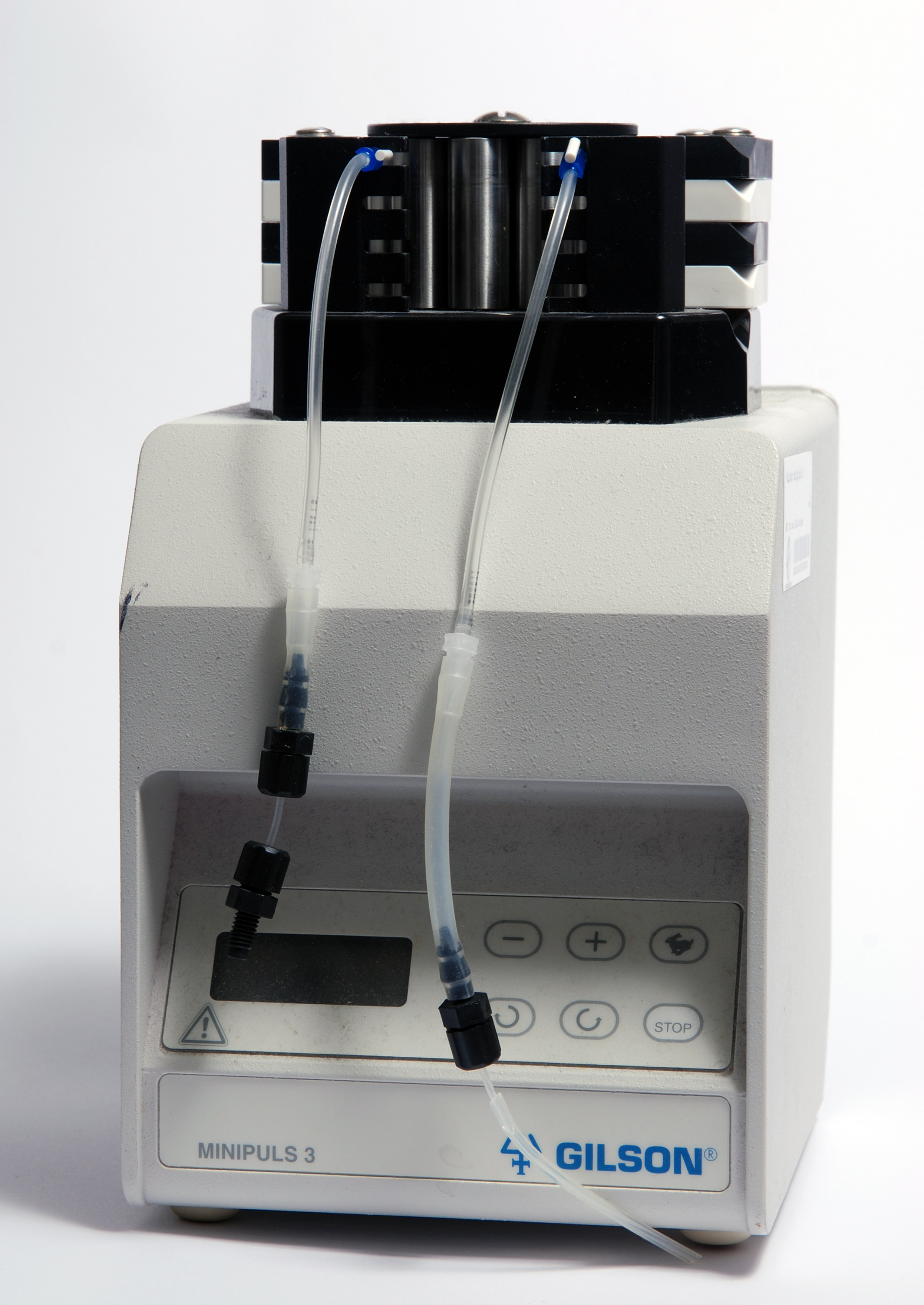
Disclosure: We may earn a commission if you purchase through links on this page, at no additional cost to you.
Peristaltic-pump tubing can cost well under one dollar per meter in large-volume marketplace listings or tens of dollars per meter for branded, precision-controlled, documented pump tubing.
That price spread is real, but it is easy to interpret incorrectly.
The cheapest meter is not necessarily the cheapest replacement.
A useful procurement comparison asks:
What does one validated meter of tubing cost in this pump, for this fluid, over its actual service life?
That means price needs to be evaluated together with MOQ, size, material grade, dimensional tolerance, documentation, shipping, qualification effort and replacement frequency.
Decision Summary
Compare tubing on three levels: purchase price per meter, landed usable cost, and cost per service hour. Low-cost bulk silicone can make sense after a specification is validated and consumption is predictable. Low-MOQ tubing can be economically better during qualification because it limits trial inventory. Branded PharMed, Norprene or specialty chemical tubing may cost far more per meter, but the premium can be justified when longer flex life, tighter dimensional control, chemical resistance or documentation reduces failures and replacement labor.
Affiliate disclosure: Some links in this guide are affiliate links. If you use them to place an eligible Alibaba order, Equipvia may earn a commission at no additional cost to you. Affiliate status does not determine the technical conclusions in this guide.
Current Price Snapshots Show Why “Price per Meter” Is Not One Market
Current public listings illustrate how wide the market is.
At the low-cost bulk end, an Alibaba category page currently shows numbered silicone peristaltic-pump tubing from Dongguan Ruixiang at approximately $0.13–0.26 per meter with a 50 m MOQ.
The same category page shows Kamoer food-grade silicone peristaltic tubing around $4.90–7.90 per meter with a 1 m MOQ.
At the branded laboratory / bioprocess end, VWR Singapore currently shows examples of PharMed BPT at:
- $65.30 for 3 m for one small-ID variant;
- $279 for 7.5 m for a 3.2 mm ID × 6.4 mm OD variant.
Those work out to roughly $21.77/m and $37.20/m, respectively.
Cole-Parmer also lists a 150 ft PharMed BPT spool at $997, or roughly $21.80/m before shipping and taxes.
These figures should not be compared as if they were identical products.
They differ by:
- tube size;
- material formulation;
- brand;
- packaging;
- quantity;
- channel;
- documentation;
- geographic market.
The useful conclusion is simply that the category spans commodity bulk tubing to high-value precision consumables.
Material Is One of the Biggest Cost Drivers
Material changes both raw-product cost and the value proposition.
Silicone
Silicone is often the lowest-cost route, especially in large coils.
It is widely available, easy to manufacture and offered by many suppliers.
Cost rises when the buyer requires:
- platinum cure;
- medical / bioprocess documentation;
- tighter tolerances;
- custom hardness;
- sterile packaging;
- validated low extractables.
PharMed BPT
PharMed BPT usually commands a significant premium.
The buyer is paying for more than “rubber.”
The commercial value may include:
- long flex life;
- controlled formulation;
- brand traceability;
- lower gas permeability than standard silicone;
- sterilization compatibility;
- regulatory or bioprocess documentation.
Norprene / A-60-G
Norprene-type tubing can also be substantially more expensive than commodity silicone, especially when supplied as branded pump tubing in small quantities.
Its economics often depend on whether longer life or better chemical resistance reduces changeouts.
Specialty chemical tubing
Lined or co-extruded solvent-resistant tubing can be expensive because it combines:
chemical-resistant inner layer
+
elastic pump-compatible outer structure
That is a different product from ordinary flexible hose.
Size Changes Price More Than Buyers Expect
Two products made from the same polymer can have very different prices because the cross-section changes material consumption.
A larger OD or thicker wall uses more polymer per meter.
Heavy-wall tubing can therefore cost materially more than standard-wall tubing even when the ID is similar.
Size also affects:
- shipping weight;
- coil volume;
- packaging;
- manufacturing yield;
- extrusion difficulty.
When comparing suppliers, make sure the quotes are for the same:
ID
OD
wall thickness
length
material grade
Otherwise, price-per-meter comparisons can be misleading.
Related guide: Peristaltic Pump Tubing Size Guide: ID, OD, Wall Thickness & Tube Numbers
MOQ Can Matter More Than Unit Price
A bulk quote may have a much lower price per meter but still be the wrong commercial choice.
Example:
Supplier A:
$0.25/m
MOQ = 100 m
Order value = $25

Supplier B:
$6/m
MOQ = 1 m
Order value = $6
If you are validating a replacement for the first time, Supplier B may be economically safer.
You are buying information:
Does this tubing actually fit and perform correctly?
Once the specification is locked and annual consumption is predictable, the bulk supplier may become more attractive.
This is why the buying process should separate:
qualification quantity
from
production quantity
Do not optimize production price before qualification is complete.
The Best Comparison Is Landed Usable Cost
Purchase price is only the first layer.
A more useful formula is:
Landed Usable Cost
=
Product Cost
+ Shipping
+ Duties / Taxes
+ Sample / Qualification Cost
+ Expected Scrap
+ Failed-Qualification Cost
Then divide by the number of meters that are actually usable.
For imported tubing, freight can materially change the economics of a low-value small order.
For premium tubing, freight may be a smaller percentage of total value.
A product with the lowest ex-factory price can lose its advantage after:
- high MOQ;
- international courier cost;
- rejected dimensions;
- wrong material;
- unusable leftover inventory.
Cost per Service Hour Is Even Better
For a wear component, service life matters.
Compare:
Cost per Service Hour
=
Landed Cost of Tube Section
÷
Validated Operating Hours
Suppose a pump uses one meter at a time.
Option A
Tube cost: $3/m
Validated life: 100 hours
Cost per service hour: $0.030
Option B
Tube cost: $12/m
Validated life: 1,000 hours
Cost per service hour: $0.012
The higher-priced tube is cheaper on a service-hour basis.
This calculation becomes even more important when changeout labor or production interruption is expensive.
Do not use catalog life as if it were your process life.
Use operating data from the actual:
- pump head;
- RPM;
- pressure;
- fluid;
- temperature.
Add Labor and Downtime for a Real Total Cost
In many professional systems, tubing cost is smaller than the cost of changing it.
A replacement event can involve:
- stopping equipment;
- draining or isolating the line;
- cleaning;
- installing tubing;
- priming;
- recalibrating;
- documenting the maintenance;
- restarting the process.
A better total-cost expression is:
Total Replacement Cost
=
Tube
+ Labor
+ Downtime
+ Cleaning / Disposal
+ Recalibration
+ Failure Risk
This is why a procurement team should not automatically replace a validated premium tube with a cheaper generic alternative.
If the generic tube needs replacement three times as often, the lower material price can disappear quickly.
Documentation Also Has a Price
A buyer may see two tubes with the same nominal dimensions and wonder why one costs five or ten times more.
Part of the difference can be quality documentation.
Examples include:
- Certificate of Conformity;
- lot traceability;
- FDA food-contact statements;
- USP Class VI evidence;
- ISO 10993 data;
- extractables / leachables information;
- sterilization data;
- controlled change notification.
Not every application needs these.
A water-transfer maintenance job should not pay for documentation it does not use.
A validated bioprocess should not remove required documentation merely to reduce price per meter.
The correct cost level is the lowest product that still satisfies the process requirement.
Custom Tubing Changes the Economics Again
Custom orders may include:
- nonstandard ID / OD;
- custom hardness;
- special cure system;
- printed markings;
- cut lengths;
- molded stoppers;
- custom packaging;
- color coding.
The unit price can increase while MOQ also rises.
Before requesting customization, ask whether an existing standard pump-tubing size already meets the mechanical requirement.
Custom dimensions are most useful when they solve a real compatibility problem, not when they simply reproduce an OEM appearance.
How to Compare Three Supplier Types
A practical sourcing comparison often looks like this:
| Supplier route | Typical advantage | Typical tradeoff |
|---|---|---|
| Bulk silicone manufacturer | Lowest unit cost at volume | Higher MOQ; more validation burden |
| Low-MOQ pump-tubing seller | Easy sampling and maintenance orders | Higher price per meter |
| Branded precision tubing | Documentation, controlled material, repeatability | Highest purchase price |
None is automatically the best.
The correct route depends on the purchase stage.
Current Alibaba Options by Cost Role
Bulk-cost route — numbered silicone
Role: cost-down / repeat-purchase candidate after dimensions and performance have been validated.
Why it fits: bulk numbered silicone is the natural route when annual usage is high and the specification is stable.
Risk: do not assume a low price compensates for wrong tolerance, hardness or pump-head fit.
Low-MOQ route — Kamoer silicone
Role: qualification, small maintenance orders and low-volume users.
Why it fits: low order quantity can reduce the cost of testing a replacement.
Risk: higher unit price may be uneconomic for validated high-volume consumption.
Premium-material route — PharMed BPT
Role: higher-value applications where long flex life, controlled formulation or documentation matters.
Why it fits: the product competes on validated performance and material control rather than lowest cost per meter.
Risk: verify authenticity, current grade, dimensions and documentation before treating the listing as equivalent to established distributor supply.
Use Annual Consumption to Decide When Bulk Buying Makes Sense
MOQ becomes easier to judge when annual usage is known.
Estimate:
Meters used per replacement
× replacements per year
× number of pumps
=
annual tubing consumption
Then compare that number with the supplier's MOQ and roll size.
If a lab uses only 6 m per year, a 100 m minimum order can create years of inventory. That may increase storage risk, tie up cash and make a later specification change more expensive.
If a production site consumes 500 m per year, the same MOQ may be entirely reasonable and a bulk price can materially reduce annual spend.
Also consider shelf life and storage conditions where the manufacturer provides them. Buying several years of tubing only to save a few cents per meter can be a poor trade if the material ages in storage or the process specification is still changing.
For repeat procurement, record:
Annual consumption
Approved suppliers
Normal MOQ
Preferred roll length
Reorder point
Safety stock
Last verified price
That turns price shopping into a controlled purchasing system instead of a one-time quote comparison.
What to Request in Every Price Quote
Ask suppliers to quote on the same basis:
Exact material / grade
ID × OD × wall thickness
Tolerance
Hardness
Length per roll
MOQ
Price
Price unit
Quantity tier
Sample cost
Shipping basis
Lead time
Packaging
Documentation included
Custom fee
Then keep technical approval separate from commercial ranking.
A cheaper quote that fails the technical gate is not a saving.
Related guide: What Specs to Send a Peristaltic Pump Tubing Supplier: RFQ Checklist
Common Costing Mistakes
Comparing different sizes
Price per meter is meaningless if the wall thickness and OD differ materially.
Ignoring MOQ
A low unit price can create expensive excess inventory.
Comparing generic and branded material as if they are identical
They may carry different formulation control and documentation.
Using purchase price instead of cost per service hour
Wear life can reverse the result.
Ignoring changeout labor
Maintenance cost can exceed the tubing cost itself.
Final Takeaway
Peristaltic-pump tubing is not one price category.
A useful commercial comparison moves through four levels:
price per meter → landed usable cost → cost per service hour → total replacement cost
For qualification, low MOQ often matters more than low unit price.
For stable high-volume consumption, bulk tubing can reduce cost significantly.
For demanding chemical, bioprocess or long-life applications, premium tubing can be economically rational even at a much higher price per meter.
The right buying question is therefore not:
“Which tube is cheapest?”
It is:
“Which validated tube gives the lowest total cost for the required performance?”
That closes an important high-intent gap in the Peristaltic Pump Replacement Tubing Single Point: the buyer can now move from selection and specification to a defensible commercial comparison.
Editorial source note: Current public price snapshots were checked against Alibaba category/listing pages, VWR/Avantor Singapore and Cole-Parmer in September 2026. Prices, MOQ, availability and currency are dynamic and should be rechecked before publication or procurement. Manufacturer and marketplace price sources are intentionally not placed in an end References section under Equipvia's reference policy.
Share this article