How to Choose a Micro pH Electrode for Small-Volume Samples
Small-volume pH measurement needs the electrode to reach the sample without touching the vessel and keep the junction wetted at the available volume. This guide covers micro versus semi-micro geometry, the temperature workflow and an acceptance test.
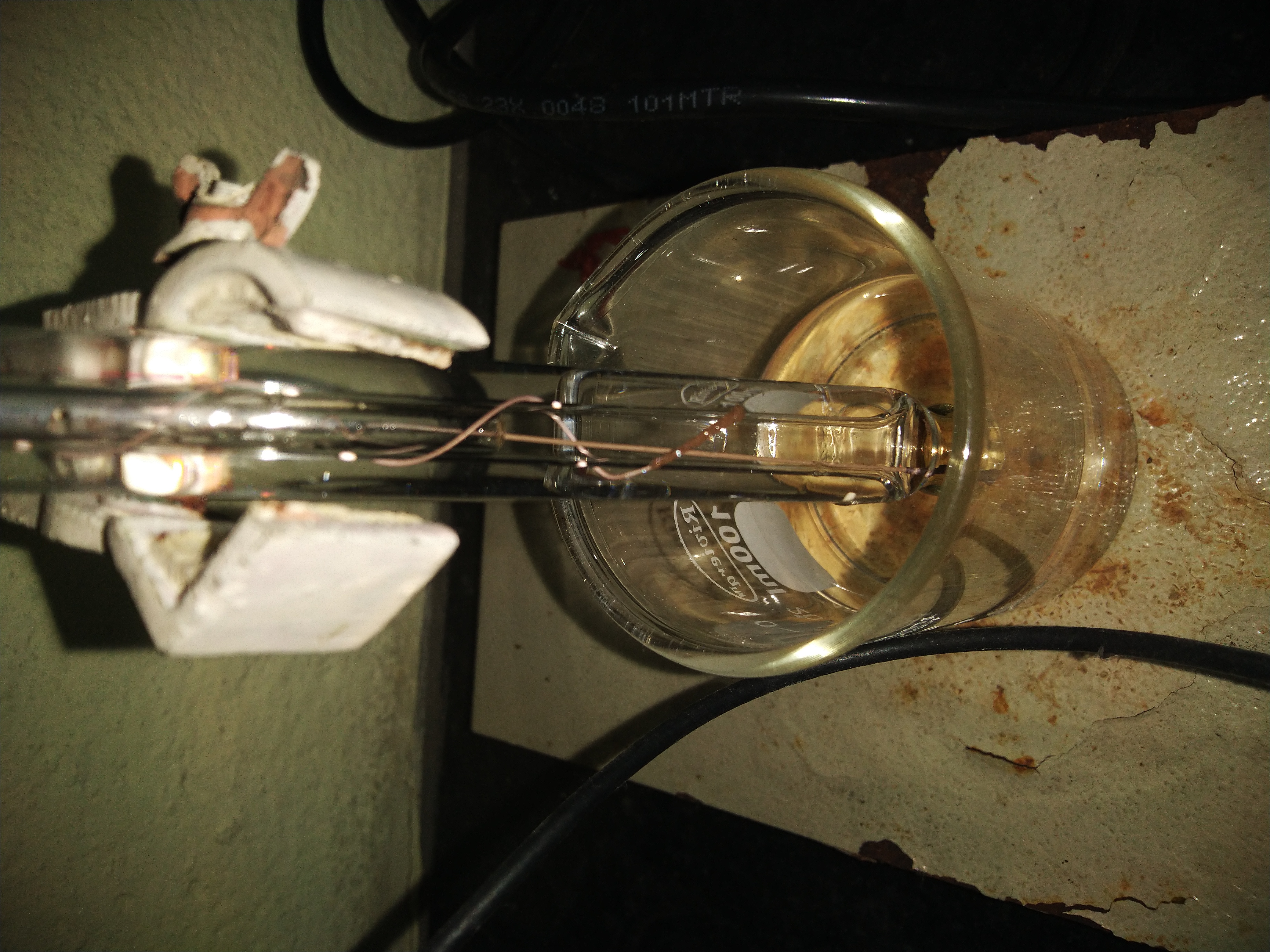
Disclosure: We may earn a commission if you purchase through links on this page, at no additional cost to you.
Small-volume pH measurement is not solved by placing a standard bulb into a smaller container. The electrode must reach the sample without touching the vessel, displace as little liquid as possible, and provide a stable reference junction at the available volume. A probe that is too large can consume the sample, fail to immerse the junction, or contaminate a valuable experiment.
This guide covers micro and semi-micro pH electrodes for laboratory samples in vials, test tubes, cuvettes, microplates and other narrow vessels. It is a selection and acceptance guide, not a claim that every miniature probe is suitable for every biological, protein-containing or viscous sample.
Start with the available volume and vessel geometry
Measure the usable liquid depth and volume before comparing specifications. Thermo Fisher describes micro pH electrodes for samples as small as 0.5 µL and notes their use in 384-well plates [E01]. Apera’s LabSen 241-180 is designed for NMR tubes and other deep, narrow containers, with a stated minimum sample volume of 50 µL [E02]. These are very different operating envelopes.
Record:
| Buyer input | Procurement consequence |
|---|---|
| Minimum sample volume | Sets the minimum wetted area and whether a micro, semi-micro or conventional probe is feasible. |
| Liquid depth | Determines whether the sensing tip and reference junction can both be immersed. |
| Vessel internal diameter | Sets the maximum shaft diameter and risk of wall contact. |
| Sample value and recovery limits | May justify a smaller, more delicate electrode and a non-destructive rinse protocol. |
| Matrix composition | Proteins, TRIS, sulfides, gels and cosmetics can require a different junction or cleaning method. |
| Temperature and ATC requirement | A narrow micro probe may not include an integrated temperature sensor. |
Do not use the advertised minimum volume as a universal accuracy guarantee. Ask how the supplier defines it, which parts of the electrode are immersed, and what stabilization criterion was used.
Micro versus semi-micro electrodes
Thermo Fisher distinguishes semi-micro electrodes, generally suitable for samples down to about 200 µL, from micro electrodes designed for much smaller volumes [E03]. Mettler Toledo’s InLab Micro documentation lists a minimum sample volume of 45 µL for its small-volume sensor [E04]. The practical choice is therefore a geometry decision:
- Use a true micro electrode when the sample is in the tens of microlitres or the vessel is exceptionally narrow.
- Use a semi-micro electrode when the sample is larger and mechanical robustness, cleaning or serviceability matters more than minimum volume.
- Use a conventional laboratory electrode when the sample volume is generous; it is usually easier to handle and less fragile.
The shaft, tip and junction must be evaluated together
A long, slim shaft can reach an NMR tube, but the narrow tip may be mechanically delicate. Confirm the shaft diameter, sensing-tip length, junction position and minimum immersion depth as one drawing—not as isolated marketplace attributes.
The reference junction must also be wetted. A reading may appear plausible if the glass bulb is immersed while the junction is not, but the result is not a valid electrode measurement. Ask the supplier for a dimensional drawing showing the measurement tip and junction, and define a no-wall-contact rule for the acceptance test.
Temperature compensation is often a separate decision
Many micro electrodes use a BNC connector but do not contain an integrated temperature sensor. Apera’s LabSen 241-180 specification explicitly states that no temperature sensor is built in; the user must add a separate temperature probe or enter temperature manually for compensation [E02]. This is a critical compatibility point. A BNC connector alone does not prove that the meter can read ATC, identify the electrode, or apply the desired temperature workflow.
Before ordering, confirm:
- Connector and cable type.
- Whether the meter accepts the electrode’s reference system.
- Whether ATC is integrated, external or manual.
- Whether a separate temperature probe fits the vessel without disturbing the sample.
- Whether calibration data are stored in the electrode or only in the meter.
Alibaba discovery evidence describes a 6 × 100 mm elongated probe with an S8-to-BNC connector for trace samples above 0.2 mL and a stated 0.01 pH accuracy [E05]. The supplier result shows REX with an approximately 11-year Alibaba platform signal [E06]. Alibaba’s verified supplier overview separately identifies REX as established in 2011 and shows electrode-related production and verification signals [E07]. These are procurement signals, not a substitute for the current model drawing or a delivered-sample test.
Status: Sourcing Candidate / VERIFY.
Stated: slim 6 × 100 mm form factor, S8-BNC connection, trace-sample positioning, and seller-stated accuracy.
Not stated or not independently verified: exact minimum liquid volume under the shipped configuration, junction location, temperature-sensor arrangement, electrolyte, calibration slope limits, current datasheet revision, compatibility with the buyer’s meter, current CPS landing identity, eligibility and Affiliate Reports attribution.
Acceptance test before routine use
Use the buyer’s actual vessel and a sacrificial or approved control sample:
- Inspect the shaft, tip, junction, cable and adapter. Confirm that the junction can be immersed without the body touching the vessel.
- Confirm the meter recognizes the connector and temperature workflow. Record whether temperature is manual or measured.
- Calibrate with fresh buffers according to the electrode and meter instructions.
- Measure a control sample at a volume just above the intended minimum. Record stabilization time, drift and replicate spread.
- Repeat after rinsing with the planned rinse volume. Check whether the probe carries liquid between samples or requires a separate cleaning step.
- Hold the probe from production use if the result changes materially when the vessel, depth or temperature workflow changes.
The release record should include Product ID, electrode serial or lot, vessel geometry, sample volume, immersion depth, temperature, calibration slope/offset, stabilization rule and replicate results. This is more useful than accepting a marketplace accuracy number without test conditions.
RFQ questions for the supplier
- Is “above 0.2 mL” the validated minimum volume for this exact 60627469494 configuration?
- Does the 6 × 100 mm dimension describe the shaft, sensing tip or both?
- Where is the reference junction relative to the glass membrane?
- Is the S8-BNC adapter included, and what is the meter-side pinout?
- Is a temperature sensor included? If not, which external sensor and method are recommended?
- What electrolyte, storage solution and cleaning limits apply?
- Provide the current drawing, manual, calibration/repeatability data and shipped configuration photos.
Bottom line
Choose a micro or semi-micro electrode from the complete measurement geometry: sample volume, liquid depth, vessel diameter, junction position and temperature workflow. The REX 962244 is a plausible sourcing lead for samples above 0.2 mL, but its exact minimum volume, junction details and meter compatibility still require supplier documentation and a controlled acceptance test. Keep the supplier CPS and product CPS as separate commercial paths and separate technical verification records.
Evidence and source notes
- E01 — Thermo Fisher Scientific, Micro pH Electrodes. https://www.thermofisher.com/search/browse/category/us/en/90151107 (accessed 2026-09-29).
- E02 — Apera Instruments, LabSen 241-180. https://aperainst.com/labsen-241-180 (accessed 2026-09-29).
- E03 — Thermo Fisher Scientific, pH measurement handbook / electrode design guidance. https://documents.thermofisher.com/TFS-Assets/LSG/brochures/pH-Measurement-Handbook-S-PHREFBK-E.pdf (accessed 2026-09-29).
- E04 — Mettler Toledo, InLab Micro sensor overview. https://www.mt.com/ph/en/home/products/Laboratory_Analytics_Browse/pH-meter/sensor/pH-sensor/InLab-Micro.html (accessed 2026-09-29).
- E05 — Alibaba product discovery result for REX 962244. https://www.alibaba.com/product-detail/962244-semi-micro-pH-sensor-Eelongated_60627469494.html (accessed 2026-09-29).
- E06 — Alibaba pH-micro category result showing REX supplier signal. https://www.alibaba.com/countrysearch/CN/ph-micro.html (accessed 2026-09-29).
- E07 — Alibaba verified supplier overview for REX (Shanghai) Technology Co., Ltd. https://suppliers.alibaba.com/rex-shanghai-technology-coltd_2776107564 (accessed 2026-09-29).
Share this article