How to Store a Laboratory pH Electrode: Storage Solution, KCl, and Dry-Probe Recovery
The storage instruction for a pH electrode is not simply keep it wet. This guide explains how to choose the specified storage liquid, keep the correct parts immersed, manage refillable and sealed electrodes, and recover a dried probe with its manufacturer procedure.
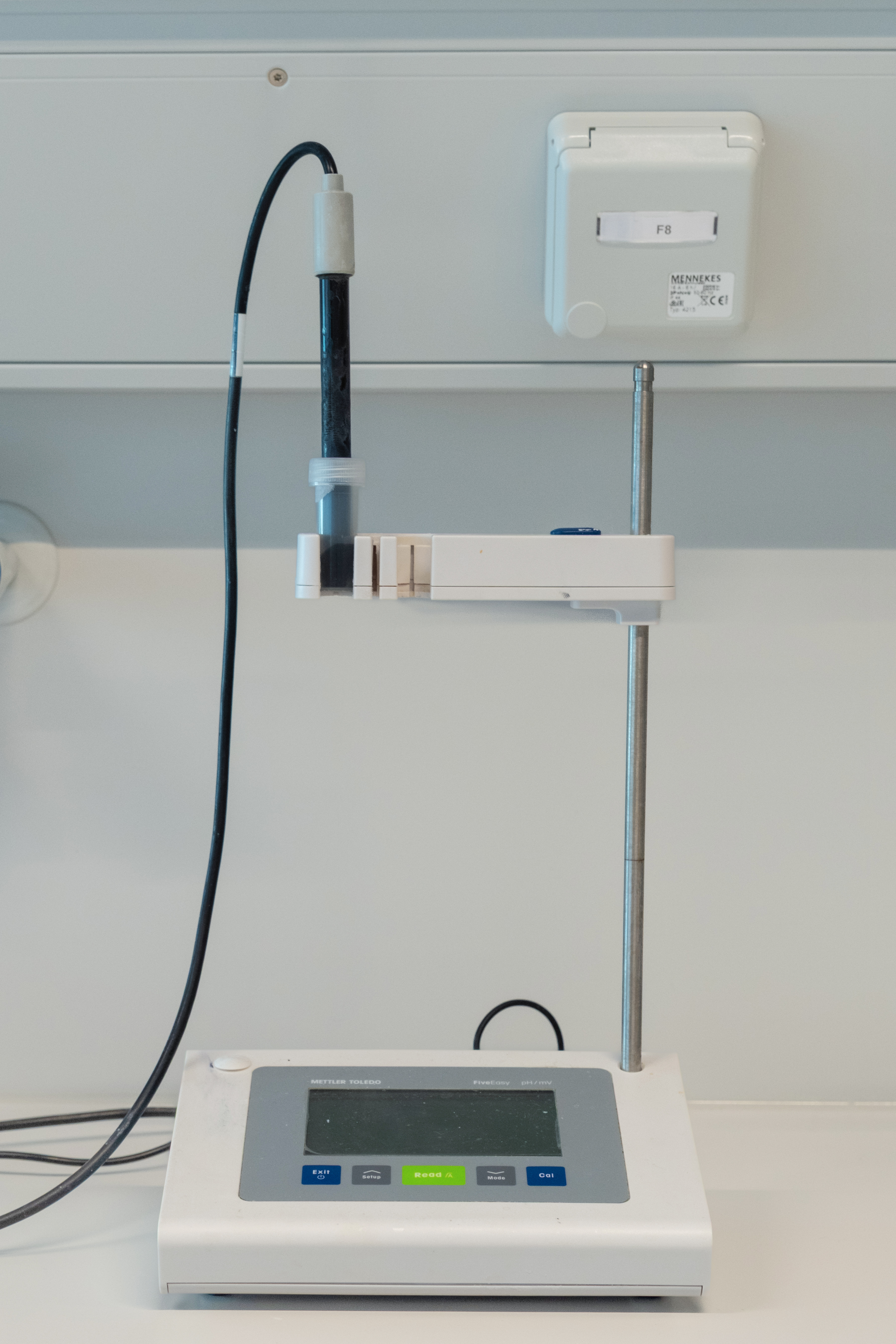
Disclosure: We may earn a commission if you purchase through links on this page, at no additional cost to you.
The storage instruction for a pH electrode is not simply “keep it wet.” A glass bulb, reference junction and—in a refillable design—the internal reference electrolyte have different jobs. A storage liquid has to protect the wetted sensing end without silently changing the reference system. That is why a laboratory should not replace the electrode manual with a generic bottle labelled “KCl” or a habit of filling the cap with DI water. [E01–E04]
This procedure is for detachable, laboratory combination pH electrodes. It covers between-run, overnight and longer non-use storage. It does not authorize changing an electrode’s internal filling solution, nor does it apply to non-glass, ISFET, antimony or specialized non-aqueous electrodes without their own instructions.
Start with the electrode, not the bottle
Before choosing a liquid, record the electrode part number and identify four features: whether it is refillable or sealed, its reference type, its junction construction, and the manufacturer’s named storage liquid. Those details matter more than the connector type. A BNC plug says nothing about whether an electrode is a single-junction, double-junction, gel-filled or refillable design.
For many conventional aqueous glass combination electrodes, the manufacturer may specify a storage solution or a potassium-chloride-based liquid. Hamilton, for example, describes 3 M KCl as an optimum storage liquid for compatible combination electrodes, while Thermo Fisher’s ROSS guide directs users to its ROSS or standard pH electrode storage solutions. These are model-family instructions, not a licence to substitute any KCl concentration or a filling electrolyte from another brand. [E01, E02]
| What the label or manual says | Storage decision | Do not assume |
|---|---|---|
| “Manufacturer storage solution” | Use that liquid in the supplied cap, sleeve or storage bottle | That a generic KCl bottle is equivalent |
| “3 M KCl” or an exact compatible KCl specification | Use the stated concentration and grade for the sensing end | That it can be poured into the internal chamber of every electrode |
| “Refill with [named electrolyte]” | This concerns the reference chamber, not necessarily external storage | That filling electrolyte and storage liquid are interchangeable |
| Sealed / gel-filled construction | Keep the designated sensing end hydrated; do not open the body | That it has a user-serviceable fill port |
| Specialized sample or non-aqueous electrode | Follow its own manual before storage | That an aqueous general-purpose procedure applies |
If the manual is unavailable, treat the exact liquid as an unresolved compatibility question. Do not guess from a marketplace title, a colour-coded cap, or another laboratory’s routine. Ask the manufacturer or supplier for the part-number-specific storage and reconditioning instruction before placing the electrode back into controlled work.
What should be immersed
The goal is to keep the pH-sensitive glass and the reference junction in their intended wet condition. In a protective cap or storage bottle, add only enough specified liquid to cover the sensing end and junction. Keep the cable connector, temperature connector and any unsealed electronics dry. Check the electrode manual when a minimum immersion depth or a special holder is specified.
After a measurement, rinse the exposed sensing end using the laboratory’s approved rinse water, then gently remove excess liquid as the manufacturer directs. Rinsing and storing are different operations: reagent-grade water may be appropriate for a brief rinse, but it is not automatically the correct storage medium. Thermo Fisher lists rinsing with reagent-grade water alongside daily storage in pH electrode storage solution; the two actions should not be collapsed into one. [E03]
Do not wipe the glass bulb aggressively. Metrohm warns that wiping can scratch the bulb or create a static charge. If the manual permits blotting, use a clean lint-free material with a light touch rather than rubbing the sensitive surface. [E04]
Why DI water is a poor storage default
Distilled or deionized water is often close at hand, so it is frequently used to fill an empty cap. That convenience creates a different chemical environment from the storage liquid specified for the reference system. Apera explicitly says not to store its pH probes in purified water because it can damage the electrode and lead to erratic readings. Hanna likewise instructs users not to store an electrode in distilled or deionized water. [E05, E06]
This is not a reason to turn a rinse-water instruction into a safety rule against DI water. The practical distinction is simple:
- Rinse: a brief, controlled step between samples or buffers, followed by the maker’s handling instruction.
- Storage: hours, days or longer in the specified storage medium, with the bulb and junction protected from drying.
If an electrode has been standing in DI water, do not decide its condition from appearance alone. Move it to the documented storage or conditioning liquid, allow the manufacturer’s stated recovery time, then calibrate with fresh buffers and record the result. The calibration article in this cluster owns the failure diagnosis when it does not recover.
Refillable and sealed electrodes need different handling
Refillable electrodes contain a reference chamber and may have a fill hole. During measurement, some models require the fill hole to be open and the electrolyte level to remain above the junction; Thermo Fisher gives those instructions for its ROSS refillable family. That is a measurement and maintenance requirement, not a generic instruction to open any electrode. [E02]
For storage, close or cover the fill opening only if the exact manual directs it. Use only the specified reference filling solution inside a refillable electrode. Thermo Fisher’s ROSS guide specifically warns against filling solutions containing silver for that family; its sample requirements also show that reference chemistry can change with the application. [E02] A generic 3 M KCl “soaking solution” may therefore be suitable only for external storage of some electrodes and unsuitable as an internal refill liquid.
With a sealed or gel-filled electrode, do not pierce a plug, remove a cap that is not a fill cap, or try to add electrolyte. Record the model, follow its own storage instruction and replace the electrode if the manufacturer’s recovery procedure and controlled calibration do not restore acceptable performance.
If the probe dried out, pause before improvising
A dry protective cap is a maintenance event, not proof that the electrode is scrap. First inspect for cracked glass, a damaged junction, leaking electrolyte or a damaged connector. Cracked sensing glass calls for replacement; do not attempt to regenerate it. [E07]
For an intact probe, use the exact recovery method in the manual. Hamilton’s laboratory-electrode instruction says an inadvertently dried electrode can be regenerated overnight in its Storage Solution. Its separate storage guidance also notes that hydration time can be needed to re-establish the glass surface condition. Hanna’s general guidance recommends at least one hour in its storage solution after cleaning for its electrodes. The different intervals illustrate why a universal “soak for X hours” rule is not technically sound. [E01, E07, E08]
After the specified recovery period:
- Rinse and handle the electrode as its manual directs.
- Calibrate using fresh, correctly selected buffers at controlled temperature.
- Record slope, offset or the model’s equivalent diagnostic values.
- Verify against an independent control before returning the instrument to reportable work.
If the electrode still fails after documented recovery, fresh buffers and the maker’s permitted maintenance, move to the diagnostic and replacement decision rather than extending the soak indefinitely. [E07]
A weekly storage check that prevents avoidable failures
For a working laboratory, a short check at the end of the week is more useful than a vague instruction to “maintain the probe.”
| Check | What to record | Action when it is not acceptable |
|---|---|---|
| Cap or storage bottle contains the specified liquid | Liquid identity, lot, date filled and visible volume | Replace with fresh specified liquid; do not top up with unknown water |
| Bulb and junction are covered | Electrode position and cap condition | Refit the correct cap or move to the designated storage bottle |
| Liquid is clean and cap is intact | Deposits, contamination, cracks or leakage | Clean only as the electrode manual permits, then replenish storage liquid |
| Refillable electrode has correct maintenance state | Model, fill solution identity and level if applicable | Follow its manual; do not transfer a storage-liquid instruction to the fill chamber |
| Post-storage calibration is traceable | Buffer lots, temperature and diagnostic result | Hold from analytical use if acceptance criteria are not met |
Do not use a fixed replacement interval for the cap liquid unless the manufacturer or the laboratory’s validated procedure sets one. Replace it when it is contaminated, evaporated, wrong, or no longer demonstrably the specified liquid; document the change so a later calibration failure can be investigated.
Sourcing lead: confirm the liquid before ordering
Affiliate disclosure: The Alibaba CPS-format link below was supplied by the account owner for an earlier article. On 2026-09-25 it redirected to Product ID 1601293145402 and retained cps_sk=qecacded in the landing URL. That confirms the destination and visible tracking parameter only; it does not establish order attribution, commission settlement, the exact ordered variant, or compatibility with a particular electrode.
Sourcing Candidate A — IKEME multi-solution inquiry listing
Ask before ordering: for electrode part number [X], quote an external storage solution only; provide concentration and composition, SDS, COA/lot, shelf life, storage conditions, bottle label photo, and explicit compatibility with the electrode’s manufacturer instruction. Stated by seller: a selectable 250 mL solution listing that includes pH-buffer variants and combines multiple solution types on one Product ID. Not stated / not independently verified: a part-number-specific pH-electrode storage liquid, KCl concentration, chemical composition, compatibility with any particular reference system, SDS/COA for the intended bottle, expiry, or whether the selected order variant is a storage solution rather than a buffer or another maintenance liquid. Ask before ordering: “For electrode part number [X], quote an external storage solution only; provide the concentration and composition, SDS, COA/lot, shelf life, storage conditions, bottle label photo, and whether it is explicitly compatible with this electrode’s manufacturer instruction.” Status: VERIFY / inquiry-only.
Screening decision: The buyer roles were (1) manufacturer-specified external storage solution, (2) an exact documented KCl storage liquid for a compatible conventional electrode, and (3) refill electrolyte for a refillable reference system. The first two must be selected against the electrode manual; the third cannot be substituted for the first two without documentation. The broad Alibaba candidates reviewed in Articles 17–18 either described buffers, mixed ORP/EC/pH solution variants, or lacked an exact storage-liquid composition and compatible-electrode evidence. No Merchant, Product, CPS Potential or Final score is published because the hard gate for the exact liquid has not been met. The link above is retained only as an inquiry lead, not a product recommendation.
Evidence and source notes
- E01 — Hamilton, “pH Sensor Storage,” storage-liquid principles and hydration discussion. https://www.hamiltoncompany.com/knowledge-base/article/ph-sensor-storage
- E02 — Thermo Fisher Scientific, ROSS® Electrode User Guide, storage solution, refillable-electrode handling and filling-solution restrictions. https://www.ankersmid.com/AutoFiles/manual/5230_manual%20triode.pdf
- E03 — Thermo Fisher Scientific, “Basic pH Electrode Care and Maintenance,” daily rinse and storage tasks. https://knowledge1.thermofisher.com/Lab_Equipment/Water_Analysis/Water_Analysis_Application_and_Technical_Notes/Basic_pH_Electrode_Care_and_Maintenance
- E04 — Metrohm, “How to calibrate a pH meter,” handling caution for glass electrodes. https://www.metrohm.com/en/discover/blog/2024/calibrate-pH-meter.html
- E05 — Apera Instruments, “Should I always keep my pH electrode soaked in storage solution?” instruction against storing applicable probes in purified water. https://support.aperainst.com/support/solutions/articles/14000051827-should-i-always-keep-my-ph-electrode-soaked-in-storage-solution-
- E06 — Hanna Instruments, “pH Electrode Storage Solution,” storage-liquid and post-cleaning guidance for Hanna electrodes. https://hannacan.com/product/hi5300-12-electrode-storage-solution-120-ml/
- E07 — Hamilton, “pH Calibration Problems,” damage, hydration and junction-related failure causes. https://www.hamiltoncompany.com/knowledge-base/article/ph-calibration-problems
- E08 — Hamilton, Operating Instruction for pH and ORP electrodes, dried-electrode regeneration instruction. https://assets-labs.hamiltoncompany.com/File-Uploads/Manual_Laboratory_pH_Redox_Electrodes_LowRes.pdf?v=1534172617
- E09 — IKEME / Alibaba seller listing, Product ID 1601293145402, mixed solution catalogue fields, checked 2026-09-25; not a compatibility document. https://www.alibaba.com/product-detail/IKEME-Laboratory-ORP-Electrodes-Ph-Calibration_1601293145402.html
Share this article