Should a Fertigation Stock Tank Be Opaque?
Opaque and covered is the practical default for stock solution. This guide separates wall colour from real opacity, maps the light paths to check and lists the tests and RFQ wording that prevent a vague tank quote.
Disclosure: We may earn a commission if you purchase through links on this page, at no additional cost to you.
How to specify light exclusion, a usable cover and an inspection-friendly tank
For a tank that stores concentrated fertilizer stock solution, the practical default is yes: use an opaque tank and cover it. The reason is not appearance. University extension guidance links light exposure to chelating-agent breakdown and recommends covering the tank to limit algae, debris, contamination and evaporation. The requirement applies to the solution and its hold time, not just to the tank catalogue description.
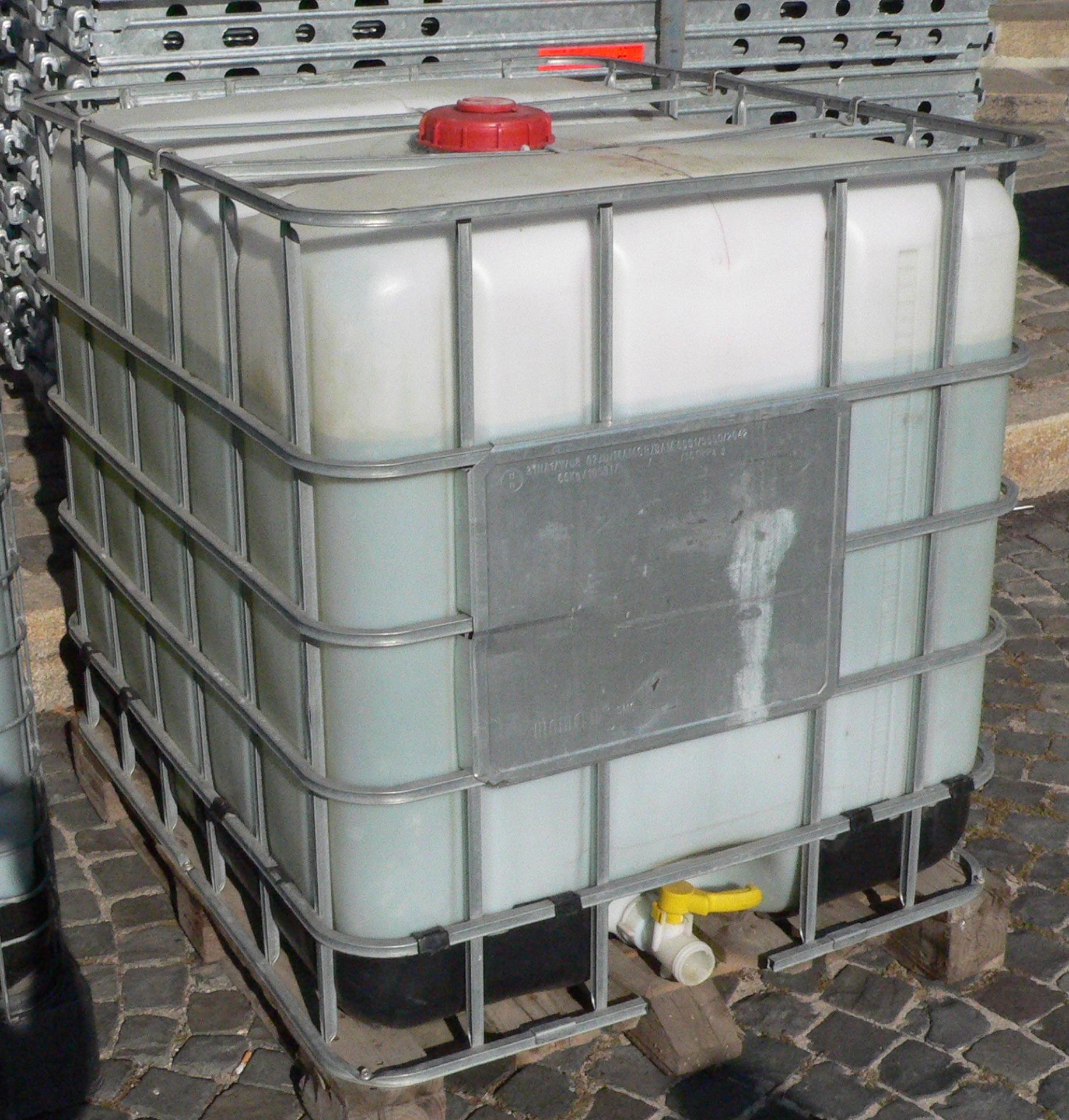
That does not mean every water vessel in an irrigation room must be black. A short-duration, water-only tank in a dark enclosure has a different risk profile from an outdoor, translucent IBC holding a micronutrient concentrate overnight. The buyer's task is to specify what must be blocked, how much access is needed, and how the supplier will prove that the installed tank does not admit enough light or contamination to change the process.
What "opaque and covered" controls
| Requirement | Controls | What it does not prove |
|---|---|---|
| Opaque tank wall | Blocks light through the main body of the tank | It does not prove that the lid, sight tube, hose or fitting is light-tight |
| Fitted cover or lid | Excludes debris and insects and limits evaporation; limits light entering from above | It does not automatically provide a safe vent, access clearance or chemical seal |
| Light-tight penetrations | Controls light leaks around suction tubes, level sensors, cable glands and inspection ports | It does not guarantee chemical compatibility or prevent precipitation |
| UV-stabilised material | May improve outdoor durability of the polymer wall and cover | UV resistance is not the same as solution opacity or chelate protection |
| Inspection access | Allows sampling, cleaning and verification without opening the whole tank | A clear inspection window can reintroduce the light path it was meant to monitor |
Treat these as separate specification lines. A supplier may call a white, translucent or UV-resistant tank "suitable for fertilizer" while leaving opacity, cover fit and light leakage unstated. Those missing fields are not harmless cosmetic details: they change the evidence status of the offer.
Stock solution, holding solution and water are not the same job
| Tank role | Typical exposure problem | Procurement implication |
|---|---|---|
| Concentrated stock or mother solution | Chelate stability, algae and debris, and concentration drift during storage or dosing | Default to an opaque body, a fitted cover and sealed or light-controlled penetrations; verify formulation-specific compatibility |
| Diluted holding tank | Light, debris and biological growth during recirculation or repeated reuse | Use opaque, covered construction unless the process owner documents a controlled dark enclosure and short residence time |
| Water-only day tank | Debris and algae may matter, but chelate protection is not the same issue | Cover and light control can still be useful; choose based on residence time, temperature and cleaning plan |
| Temporary mixing vessel | Short exposure may reduce the need for a permanent lid, but mixing and transfer can still add contamination | Specify the maximum open time, inspection method and cleanout responsibility instead of assuming "temporary" means risk-free |
The word "stock" is doing technical work here. If a transparent vessel is only used to measure clean water for a few minutes, the decision may be different. If it holds concentrated fertilizer while an injector is idle, the same vessel should be evaluated as a stock tank even if the supplier lists it as a generic water container.
Do not confuse opacity with a black colour
Colour is a discovery clue, not a test result. Black or dark polymer often blocks more visible light, but the buyer still needs the material, wall construction and cover details. White, yellow or natural HDPE can be opaque at one thickness and translucent at another. A painted exterior may hide a light leak at a clear seam, lid or fitting. Ask the supplier to state whether the tank wall and cover are opaque or light-blocking for the intended service, and request a photo or a simple light-exclusion test on the delivered variant.
| Light path to inspect | Why it is easy to miss | Acceptance question |
|---|---|---|
| Main tank wall | The listing image may show colour but not transmission through the actual wall | Can a bright lamp be seen through the wall in a dark room? Is wall thickness specified? |
| Lid and manway | A loose lid, clear gasket gap or uncovered fill opening can admit light and debris | Does the cover overlap or seal the opening while still allowing safe venting? |
| Level tube or sight glass | A clear tube can illuminate the entire solution boundary even when the tank body is opaque | Can level be sensed without a permanently transparent liquid path? |
| Hoses and fittings | Clear suction hose, translucent elbows or clear sample ports create local growth points | Are wetted lines opaque or shielded, and can each penetration be cleaned? |
| Inspection window | A small window is convenient but may defeat the light-control objective | Is the window necessary, and can it be covered except during a controlled inspection? |
Cover design is an operations decision
- Leave a safe vent path. A sealed lid is not a substitute for correct venting. Specify how the tank admits or releases air during filling, injection and draining, and keep the vent protected from dust and splash.
- Keep the access usable. The cover must allow sampling, adding concentrate and removing the suction assembly without being left off for an entire shift. Hinged, split or removable designs can be appropriate when the opening sequence is documented.
- Control condensate and wash water. A cover that sheds roof water, cleaning fluid or fertilizer back into the tank can change concentration or introduce contamination. Define the drain direction and cleaning method.
- Protect installed instruments. Level probes, agitator shafts and suction tubes need penetrations that do not leave large open gaps. Record how the cover is removed without changing the sensor or pickup setting.
A simple acceptance test for light exclusion
| Test | Method | Pass condition |
|---|---|---|
| Body test | Place a bright lamp inside or outside the empty tank in a dark room, following the procedure agreed with the supplier | No material light transmission through the body at the locations relevant to the solution surface |
| Cover test | Install the production lid, manway, vent and penetrations exactly as they will be used; inspect from the dark side | No unplanned bright line or open gap at the solution zone; venting remains functional |
| Penetration test | Fit the real suction tube, level device, cables and hoses; inspect clear or translucent components | Each light path is intentionally shielded, removed or accepted by the process owner |
| Contamination test | Run the normal fill, sampling and cleaning sequence with water and observe lid runoff, debris entry and access behaviour | The cover stays usable without uncontrolled opening, dripping or debris entry |
| Process test | Hold a representative water-only batch for the planned residence time, then inspect the tank and lines before returning to chemical service | No unexpected light leak, residue or cleaning difficulty; record the result with the tank identity |
This is an acceptance check, not a universal optical specification. If the fertilizer manufacturer provides a light-exposure limit, or the formulation contains a light-sensitive component, that document controls. Otherwise, record the agreed test method, room conditions, tank variant and date, so a replacement lid or fitting can be checked against the same boundary.
RFQ wording that prevents a vague "chemical tank" quote
| RFQ line | Ask the supplier to state |
|---|---|
| Tank role and residence time | Stock, holding, water-only or temporary mixing service; normal and maximum hold time; indoor or outdoor location |
| Opacity evidence | Body and cover material, colour, wall thickness, whether the delivered variant is opaque or light-blocking, and the supplier's test or photo evidence |
| Cover and vent | Lid or manway type, overlap or gasket, vent arrangement, access sequence, splash and runoff path, and light control around penetrations |
| Wetted compatibility | Exact fertilizer formulation, concentration, pH, temperature, polymer grade, gasket and seal material, and the compatibility document or test basis |
| Instrument openings | Level sensor, suction tube, agitator, sample port and hose penetrations; identify any transparent component and its shield |
| Maintenance and acceptance | Cleaning method, inspection access, replacement cover and parts, light-exclusion test, water-only test and residual-risk notes |
Sourcing candidates for an opaque or covered tank
These offers are role-based sourcing candidates, not approved recommendations. The listings help locate tank formats; they do not independently establish opacity, cover fit, light transmission, chemistry compatibility or field performance. Because those points are central here, no candidate is treated as approved without an RFQ and an acceptance test.
Decision rule
For concentrated fertilizer stock and reused diluted nutrient solution, specify an opaque tank with a fitted, light-controlled cover unless the process owner documents an equivalent dark enclosure and a short residence time. Then verify the whole light path: tank wall, lid, vent, level device, hoses and penetrations. Do not approve a tank because it is black, labelled "chemical grade" or described as UV-resistant. Approve it when the delivered variant has a defined opacity or light-exclusion boundary, a usable cover and vent, compatible wetted materials, and a recorded water-only acceptance test.
Share this article