How to Choose a MERV 13 HVAC Filter Your System Can Handle
Two filters with the same nominal size and MERV rating can have different resistance. The useful comparison is the exact model pressure drop at your system airflow, checked against the equipment limits.
Disclosure: We may earn a commission if you purchase through links on this page, at no additional cost to you.
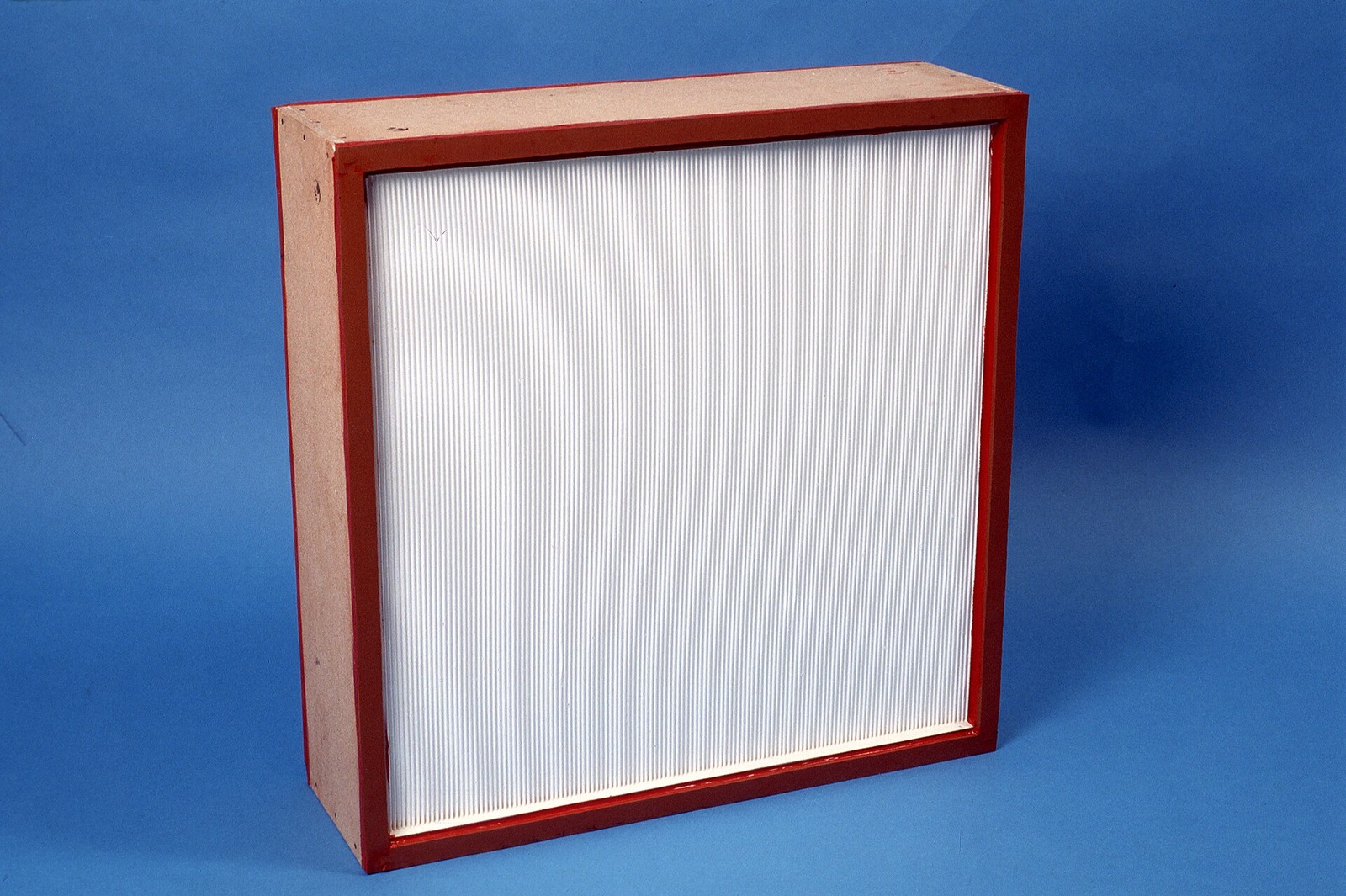
A MERV 13 filter can capture substantially more fine particles than a common MERV 8 filter, but the rating alone does not tell you whether a particular furnace or air handler can move enough air through a particular filter. The useful comparison is the exact filter's pressure drop at your system's airflow, checked against the equipment's allowable pressure and airflow requirements. That distinction matters especially with a one-inch replacement: two filters with the same nominal size and MERV rating can have different resistance.
This guide shows homeowners and building-maintenance buyers how to verify a model before switching, what to ask a supplier, and when a technician needs to measure the system.
The decision is about the exact filter, not just MERV
MERV, or Minimum Efficiency Reporting Value, classifies how effectively an air-cleaning device captures particles across specified size ranges. Under the EPA's summary of ASHRAE Standard 52.2, MERV 13 filters have minimum average efficiencies of 50% for 0.3–1.0 micrometre particles, 85% for 1.0–3.0 micrometres, and 90% for 3.0–10 micrometres. MERV 8 has a minimum of 20% for the 1.0–3.0 micrometre band and is not assigned a minimum in the 0.3–1.0 micrometre band in that table. These ratings describe particle capture under a test method; they are not a promise about room-level air quality or a measure of airflow resistance.
EPA advises choosing MERV 13, or the highest rating the system fan and filter slot can accommodate, if you decide to upgrade filtration. CDC/NIOSH gives similar conditional advice: use MERV 13 or the highest efficiency that does not harm overall HVAC performance. It specifically says to investigate the actual filter's pressure-drop ratings at intended airflow before an upgrade. Neither agency's advice means that every MERV 13 product fits every system.
Pressure drop is the reduction in air pressure as air passes through a filter. It is commonly stated in inches of water column (in. w.c.) or pascals, at a stated airflow or face velocity. Higher resistance can reduce delivered airflow, increase fan energy, or interfere with temperature and humidity control. The size of the effect depends on filter construction, available media area, airflow, dust loading, and the blower and duct system. MERV by itself does not provide the pressure-drop number.
Start with the unit and filter slot you actually have
Before ordering, record the equipment manufacturer and model from the unit nameplate, then find the installation or service manual. The manual may specify a maximum external static pressure, an airflow range, filter dimensions, or an approved filter cabinet. Do not assume the maximum external static pressure is the allowable pressure drop for the filter. External static pressure applies to the air path as a whole; the filter is only one component, alongside grilles, ducts, coils, dampers, and other restrictions. The system designer or technician must determine how much pressure budget is available to the filter.
Next, read the size printed on the old filter and inspect the rack or return grille. Note nominal dimensions, actual dimensions if shown, thickness, airflow arrow, and where the filter sits. A label such as 20 × 20 × 1 inches is a nominal size; the actual frame may be smaller. Check the cabinet or grille specification if available. A filter that is too small can leave a bypass gap; one that is too large or thick can bow, crush, or fail to seat. PNNL's installation guidance recommends documenting dimensions and using the equipment's stated resistance information when selecting replacements.
Do not treat a deeper filter as a drop-in alternative. A four- or five-inch media filter needs a cabinet designed for that depth and enough clearance to remove it. More media area can lower face velocity and may reduce pressure drop for a given airflow, but only if the system is built for the larger filter. DOE's Building America Solution Center describes increasing filter area or using parallel filters as design options; those are duct or cabinet changes for a qualified HVAC professional, not a reason to force a larger filter into a one-inch slot.
Find pressure-drop data at the airflow you need
Ask the filter manufacturer for a product data sheet for the exact model and size, not a generic MERV chart. You need the initial resistance or pressure-drop curve at the airflow your equipment is designed to move. Compare like with like: a pressure value measured at 800 cubic feet per minute cannot be compared directly with one measured at 1,200 CFM. If data are expressed as face velocity rather than CFM, confirm the filter's effective face area before comparing. Ask whether the stated figure is for a clean filter and how the supplier defines its final or recommended change-out resistance.
A MERV 13 filter may have higher initial resistance than a MERV 8 model, but the difference is product-specific. One California Energy Commission technical filing included a particular modelled comparison where the initial total static pressure was 0.240 in. w.c. for the tested MERV 8 case and 0.410 in. w.c. for the tested MERV 13 case; in that same table the difference diminished as both filters loaded, reaching the same modelled value at the final step. Those numbers are not universal specifications for off-the-shelf furnace filters: they belong to that filing's comparison and assumptions. Use manufacturer data for the actual candidate.
A supplier who can only repeat "low resistance" or "high airflow" without a curve or test point has not given enough information to establish compatibility. Request the pressure drop at two or more relevant airflow points if your blower operates at different heating and cooling airflows. For a multi-zone or variable-speed system, a technician may need to confirm the operating mode that produces the highest airflow through the filter. A single marketing number without size, airflow, and test condition is not a useful comparison.
Check the installed system if the answer is still uncertain
If the manual does not state a filter resistance allowance, or if airflow was already weak, have an HVAC technician measure total external static pressure and pressure drop across the filter at operating conditions. The technician can compare the readings with the equipment's blower table and required airflow. PNNL's guidance describes static-pressure measurement with a manometer and emphasises that the filter's resistance must stay within the system's allowable pressure drop. The measurement involves drilling or using test ports in ductwork on some systems; it is not necessary for a homeowner to improvise holes or alter blower settings.
A practical sequence for a technician is: inspect the filter direction and fit; verify the model and size; measure pressure on both sides of the filter; check total external static pressure; then compare airflow and pressure readings with the equipment documentation. If the filter itself consumes too much of the available pressure budget, the remedy may be a larger filter area, a compatible deep-media cabinet, duct correction, or a different filter model. Replacing a clogged filter can also help, but recurring rapid loading may point to dust sources, return leaks, construction debris, or an undersized filter area.
Do not diagnose a system from weak supply airflow alone. A dirty evaporator coil, obstructed return, closed dampers, duct leakage, blower problem, or incorrect setup can create similar symptoms. If the problem began immediately after changing filter models, record that timing and give the old and new model details to the technician. Do not run the system without a filter as a workaround: unfiltered return air can carry debris into the equipment, and an open or missing filter can also allow bypass around the rack.
What to do if a one-inch MERV 13 is not compatible
First, compare more than one exact product. Pleat geometry, media type, frame, and effective surface area vary. A different one-inch MERV 13 model may have a lower pressure drop at the same airflow; the rating does not force every product to behave identically. Confirm the stated MERV rating is supported by test documentation for that model and size, and get the pressure data in writing.
Second, ask whether the equipment can take a manufacturer-approved deeper media cabinet or a larger return filter surface. A deeper or larger filter may provide more media area, but it changes the installation and must be selected for the unit and duct. Never stack filters to simulate a deeper product; two filters in series add resistance rather than creating the area of one properly designed media filter. Do not add a second filter at another return location unless the system design calls for it.
Third, if the system cannot maintain its required airflow with a suitable MERV 13 filter, use the highest compatible filter identified by the technician and consider a separate room air cleaner for additional particle reduction. CDC/NIOSH notes that portable HEPA units use their own fan and are commonly used as auxiliary air cleaning; they are not a substitute for ventilation or central filtration. Select a portable unit by room size and clean-air delivery rate, not by assuming a central HVAC filter can accept HEPA media.
A replacement filter buying checklist
Before approving a first order or switching brands, collect these items from the equipment documentation and supplier:
- Equipment make, model, filter cabinet or grille model, and the approved filter dimensions.
- The filter's exact manufacturer part number, nominal and actual size, thickness, and airflow direction.
- The MERV test claim and the document that applies to the exact model and size.
- Initial pressure drop at the intended airflow, with units, test conditions, and preferably a curve.
- Recommended final resistance or replacement trigger, if the manufacturer publishes one.
- Minimum order quantity, carton quantity, lead time, shipping terms, and whether future orders will use the same media and construction.
For recurring maintenance, keep one verified filter model in the asset record and photograph the installed label and rack. A generic description such as "20 × 20 × 1 MERV 13" is not a reliable reorder specification if several manufacturers sell different filters under that size. If you are evaluating a new supplier, buy a small evaluation quantity only after confirming the part number, test data, and physical fit. Do not stock a year's supply based solely on a marketplace title.
Replacement timing depends on loading and system conditions
Follow the equipment or filter manufacturer's replacement instructions. The right interval varies with runtime, indoor dust, pets, renovation work, outdoor smoke, filter area, and the pressure at which the system is designed to operate. A calendar interval printed on a retail package is a starting point, not a measurement of your actual filter loading. Inspect the filter and replace it when the manufacturer's guidance or a technician's pressure criterion says it is due. Write the installation date on the frame, and check sooner after construction or a smoke event.
A filter can look dirty without being at its replacement limit, and a filter that looks reasonably clean can still be restrictive if it is small for the airflow. Do not wash or reuse a disposable pleated filter unless that exact model is expressly designed for cleaning. Keep the cardboard frame intact, remove shipping wrap, and make sure the arrow points in the direction of airflow. A poorly seated filter lets air bypass the media and defeats the reason for upgrading.
Equipvia may earn a commission from qualifying purchases through this link. The link resolved to Product ID 1601275042196 during review. CPS resolution does not verify the seller's technical claims, product quality, affiliate eligibility, or commission attribution. Check the actual selected variant and current terms before ordering.
Ask the seller for the manufacturer and part number, actual dimensions, current MOQ, a pressure-drop curve at your airflow, a test report for the exact size, and written confirmation that the media and frame will remain unchanged on repeat orders. These listing details are seller-provided, not independent confirmation of MERV certification, pressure drop, actual dimensions, suitability for a specific unit, or batch consistency.
The short answer
Choose a MERV 13 filter only after confirming the exact product's pressure drop at your system's airflow and checking that the equipment has enough pressure and airflow capacity. If product-specific pressure data or the system's allowance is unavailable, keep the current specified model until a technician or manufacturer can resolve the uncertainty. For maintenance buyers, the lasting reorder record is the equipment model plus the filter part number and pressure data, not the MERV number by itself.
Share this article