Commercial Embroidery Bobbins: Size L vs M and How to Choose
L and M are size families, not quality grades, and neither is confirmed by a machine brand on a listing. The bobbin case and the model manual decide, then construction and thread decide the rest.
Disclosure: We may earn a commission if you purchase through links on this page, at no additional cost to you.
Before ordering a box of prewound bobbins, identify the exact bobbin size your machine and bobbin case use, then match the construction and thread specification. Style L is common in commercial embroidery; Style M is larger and fits only machines built for it. Neither a familiar machine brand nor a marketplace title is enough to confirm fit.
The machine manual, bobbin case, or authorised dealer remains the final fit authority.
Start with the machine, not the supplier title
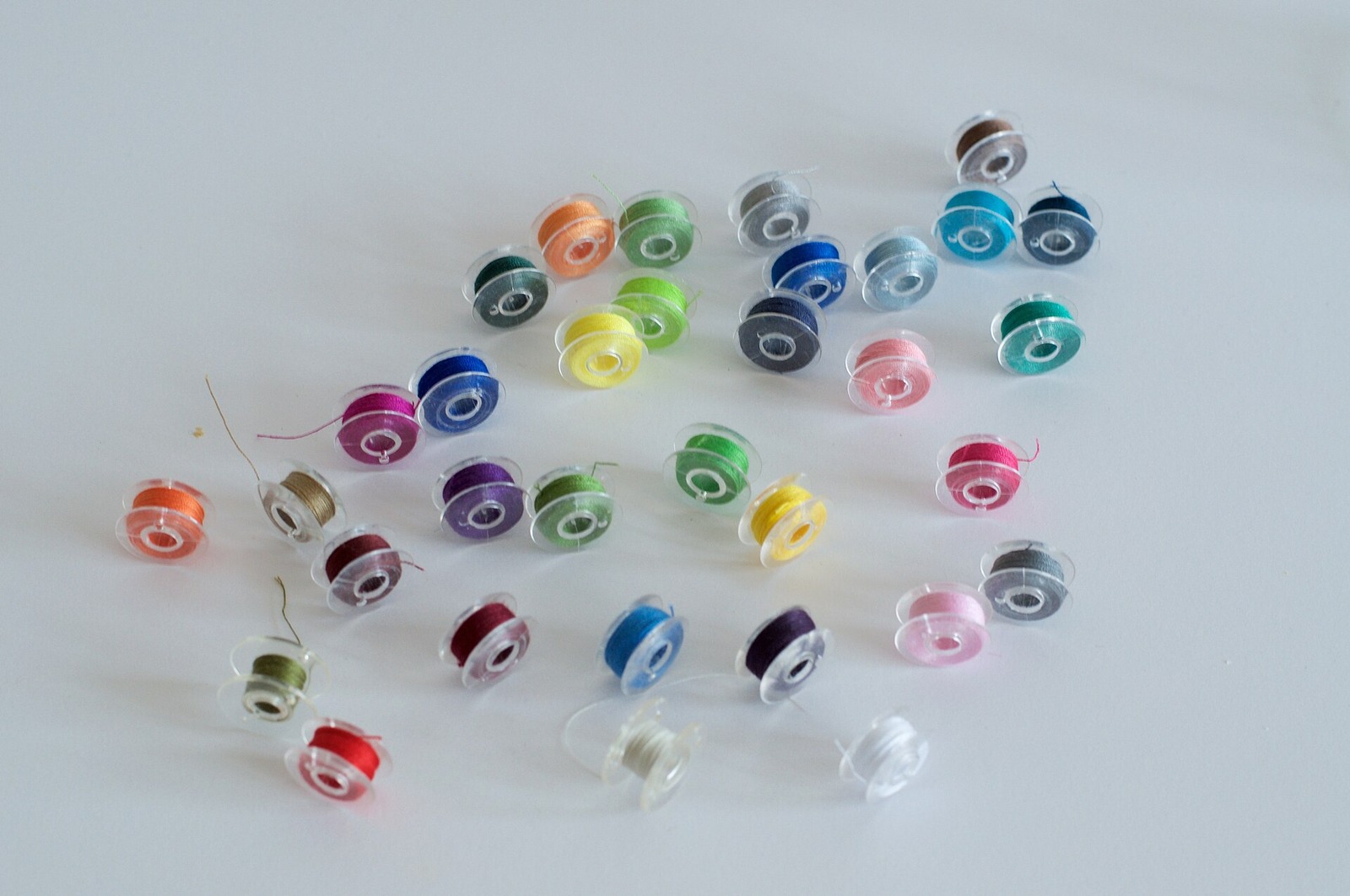
Prewound bobbins are ready-wound lower thread used in the rotary hook or bobbin case. They can save on-site winding time and simplify replenishment, but "prewound" describes how the thread arrives. It does not specify the bobbin dimensions, core construction, thread fibre, winding amount, or compatibility.
Madeira USA describes Style L as the most commonly used size in commercial machines and Style M as a larger, less common commercial size. Its general guide compares L's diameter to a U.S. nickel and M's to a quarter; that is a rough visual aid, not a measurement specification. The same guide notes that Class 15 / Style A can have a similar diameter to L but is taller. Similar-looking bobbins are not automatically interchangeable.
Check the manual for the exact model and, where relevant, the rotary hook or bobbin-case part number. If documentation is unavailable, remove the current bobbin carefully and compare it with the model's parts diagram or ask the machine dealer. Do not rely on "fits Tajima," "fits Barudan," or a broad multi-brand list alone: a brand may have several machine families and bobbin-case arrangements. The seller should confirm the exact model and the size required by its case.
Check before buying
| What to record | Why it matters |
|---|---|
| Machine identity: brand, full model, head configuration if relevant | A brand-only match can hide different hook or case requirements |
| Bobbin size: L, M, or the model-specific style stated in the manual | A wrong diameter or height can bind, wobble, or fail to seat |
| Bobbin case: case part number and any spring or insert instructions | A bobbin type may require a compatible case setup |
| Construction: paper-sided, plastic-sided, sideless, magnetic-sided, or magnetic-core | Side and core design affect handling and may have compatibility conditions |
| Thread: fibre, construction, colour, and supplier's size notation | Thread behaviour and finished underside matter to the application |
| Winding: whether the bobbin is evenly wound and the stated length or net weight | "144 per box" says nothing by itself about usable thread per bobbin |
If your current bobbins work, keep one clean, empty sample and its packaging as a reference. Photograph both faces, the profile, any printed label, and the bobbin case. This reference is more reliable than a machine-brand keyword.
Style L and Style M are size families, not quality grades
Style L is a common starting point for commercial embroidery, but it is not a universal standard for every machine. Style M is larger and can hold more thread in compatible equipment. Thread amount varies by manufacturer and construction; compare capacity only when listings specify the same measurement method and variant.
A larger bobbin does not make a suitable upgrade if the machine is designed around L. It may not fit the case, may not rotate correctly, or may interfere with thread delivery. Likewise, choosing L because it is widely sold does not prove it is right for your machine. Verify the style in the exact model's documentation before placing a bulk order.
"L size" and "Class 15" should not be treated as synonyms. Madeira's guide describes Class 15 / Style A as having a similar diameter to L but greater height. The profile and case are part of the fit. When a listing uses several size labels together, request dimensions or a compatibility statement tied to your model, not a generic chart copied into the page.
Paper sides, plastic sides, sideless, and magnetic options
Once size is confirmed, compare how the bobbin is built. Paper-sided bobbins have flanges that help contain the wound thread. They are a familiar production option and are easy to handle in boxes and during changeovers. Plastic-sided versions make remaining thread visible through transparent flanges and are less affected by moisture than paper, though the material brings its own disposal considerations.
Sideless bobbins have no flanges. Some operators prefer the open profile because it makes the remaining thread easier to see. Since the thread is not held between side flanges, follow the supplier's handling instructions and inspect the winding before use. Do not assume a sideless bobbin will be accepted by every case or that it can be mixed freely with other types without a test.
"Magnetic" is used for more than one construction. A magnetic-sided bobbin and a sideless bobbin with a magnetic core are not the same product. Madeira explains that magnetic-core versions are attracted to a compatible metal bobbin case and are designed to help control overspin as the bobbin becomes lighter. It also notes that some such products may require removal of an anti-backlash spring. That is a setup change: do not remove a spring unless the bobbin manufacturer's instructions and your machine guidance say to do so.
Choose by fit and conditions, not an assumed performance ranking. If you change from paper-sided to magnetic-core, for example, run a controlled trial on one head or a short job first. Record the case configuration and test pattern. If tension changes, return to the known-good setup and isolate whether the cause was the bobbin, case, spring, thread, or upper-thread adjustment.
What 75D/2 and "60 wt" do and do not tell you
Many supplier listings for commercial prewound bobbins show a notation such as 75D/2, sometimes with "60 wt" in the title. Treat these as supplier specifications that must be read in context, not as a universal guarantee that two listings perform identically. Denier-based notation and weight labels come from different thread-numbering conventions, and sellers do not always explain their conversion or whether "75D/2" describes each ply or the combined yarn. Ask the supplier to state fibre, thread construction, and the exact machine-embroidery bobbin product being offered.
Polyester is common in embroidery bobbin thread. Madeira's guide distinguishes continuous-filament polyester, made from long uninterrupted filaments, from spun polyester, made from shorter fibres. Its guide says filament typically produces less lint in metal bobbin cases and is often chosen by commercial embroiderers; spun polyester can build more lint and may require more frequent cleaning. This is selection context, not a guarantee; check the item's data sheet and test it in your setup.
White is a common all-purpose bobbin colour because the underside is often hidden by the garment. If the reverse will be visible on towels, linens, or jackets, a dark bobbin may look cleaner when the top thread and fabric are dark. Check customer requirements first. On reversible work, a dark bobbin can show through a pale top thread or light fabric, so a sample is worthwhile.
For length, box count alone is not enough. A 144-piece box is a packaging quantity, not the thread capacity of each bobbin. Ask for length per bobbin, net weight, or another measurable fill specification, and clarify whether the figure is nominal or verified. If your shop tracks consumption per job, compare how many bobbins a sample batch actually completes rather than extrapolating from an unsupported "high capacity" claim.
Confirm the fit and order a test quantity
Before buying a case quantity, send the supplier the machine brand and exact model, bobbin-case reference, required style, and a photo of the current bobbin. Ask them to confirm in writing:
- L, M, or exact machine-specific size and the dimensions of the selected variant.
- Paper side, plastic side, sideless, magnetic side, or magnetic core.
- Thread fibre and construction, such as continuous-filament or spun polyester.
- Their meaning for "75D/2" and whether "60 wt" is a separate supplier label.
- Thread amount per bobbin and quantity per box.
- Whether the bobbin requires a different case, insert, or spring setup.
- Sample availability, lot identification, and what happens if the chosen variant does not fit.
Request photos of the actual selected option, not only a stock image. Marketplace pages often combine several types, colours, or thread counts under one product listing, and the chosen dropdown variant can differ from the headline. Keep the written compatibility answer with the purchase record for the next reorder.
A low minimum order makes testing easier but does not prove quality. Test one small lot under normal conditions before standardising it across all heads. Use the same design, fabric, stabiliser, needle, upper thread, and machine settings as your known-good run. Change only the bobbin product. Inspect the front and reverse, listen for abnormal hook noise, watch for thread breaks and runout, and record the machine, head, lot, and results. If a tension adjustment is needed, make one small documented change at a time and return to the baseline if the result worsens.
Install and troubleshoot without masking the cause
Use your machine manual for the direction and path for loading the lower thread. Tajima's public beginner guide, for example, describes setting the lower thread clockwise for the machine covered in that guide, passing it through the slit and under the tension spring, leaving a specified tail, and checking that the thread pulls with controlled resistance. It also distinguishes a coil-type arrangement. These instructions are model-specific; check your machine's own manual before applying a direction or wrap count.
If bobbin thread appears on the top of the embroidery, or the underside suddenly has no upper thread showing, resist immediately turning tension screws. First rethread the upper path, check that the bobbin is seated and threaded through the case correctly, inspect for lint or thread fragments, and verify the bobbin is the correct type and not damaged or overfilled. Gunold's commercial troubleshooting guide lists upper tension, bobbin-case setting, debris, and a worn or damaged bobbin case among possible causes of tension problems. It warns that "bird nesting" can damage the rotary hook. A thread symptom is not proof that a new bobbin batch is defective.
When the same defect appears across different bobbins, inspect the case and machine setup before rejecting the whole lot. If only one bobbin from a new box behaves differently, compare its winding, size, side or core, and label against the others, then test another bobbin from the same lot. Keep defective samples and packaging for a supplier claim. Avoid adjusting several tension points at once, because that removes the evidence needed to identify the cause.
Equipvia may earn a commission from qualifying purchases through this link. The link resolved to Product ID 1601323346613 during review. CPS resolution does not verify the seller's technical claims, the exact bobbin dimensions, affiliate eligibility, or commission attribution. Check the actual selected variant and current terms before ordering.
The indexed listing does not establish compatibility for a particular model, the selected option, thread length, or whether the bobbin is magnetic-sided rather than another construction. Use the link to inspect or contact the supplier, and confirm the exact model and selected SKU before purchase. Do not assume price or MOQ from a search snippet; marketplace terms vary by quantity, destination, variant, and time.
A practical reorder rule
Keep one approved bobbin sample and a short specification in the shop: machine model, case reference, style, side and core type, thread fibre and notation, colour, lot, and purchase source. When stock runs low, reorder the same construction and specification first. If you want to change brand, thread type, or magnetic design, test the new lot separately rather than changing it during an active production run.
For many commercial shops, Style L is the first size to check because it is widely used; that is a search starting point, not a final answer. Style M, Class 15, and other machine-specific bobbins remain valid where the machine documentation calls for them. Match the case, verify the thread, test the lot, then set a reorder point based on your actual use. That routine prevents a cheap box of the wrong bobbins from becoming a machine stoppage.
Share this article