How to Choose a C19 to C20 Power Cord for a UPS
Tracing source outlet to equipment inlet settles the connector question in one pass. The electrical question needs the whole path, and the smallest number wins.
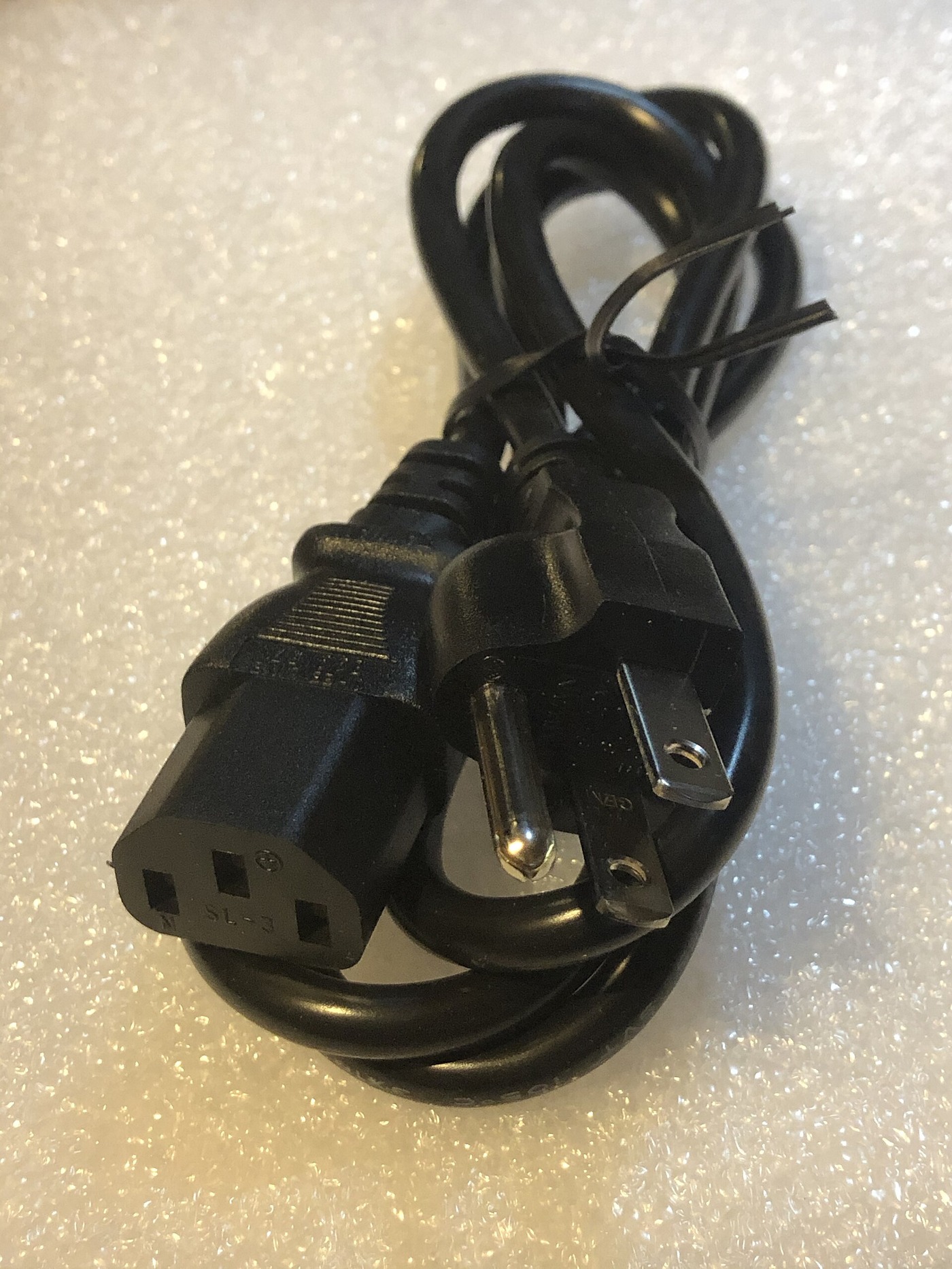
Disclosure: We may earn a commission if you purchase through links on this page, at no additional cost to you.
A C19-to-C20 cord is a short, high-current jumper used between compatible rack power equipment. In the common UPS-to-server arrangement, the UPS or rack PDU has a C19 outlet, the cord has a C20 plug at that end, and its C19 socket fits the server's C20 inlet. It is easy to reverse the names because retailers often describe the cable by either end first. Trace the connection physically: source outlet, then cord plug, then cord socket, then equipment inlet.
This guide covers selecting that C20-male-to-C19-female jumper for a UPS, PDU, ATS, or high-power IT device. It is not a battery lead, a wall-to-UPS input cord, or a generic "UPS cable." If the UPS outlet is C13, this jumper will not fit. If the server inlet is C14, a C19/C20 cord is also the wrong connector pair; that path needs a different mixed-end cord and a separate rating check.
Before shopping, record the exact UPS model, outlet number, outlet-group rating, equipment model, and inlet shape. A photograph helps, but read the markings too. The cord can have the right ends and still be unsuitable because its voltage, continuous current, wire construction, approvals, or length do not match the installation.
Identify each end in the installed power path
C19 is the female cord connector with three rectangular contact openings. It mates with a C20 male inlet on equipment. The plug on the other end of a C19/C20 jumper is a C20, which mates with a C19 outlet on the UPS or PDU. Those mating pairs are easy to reverse in search queries: "C19 to C20" and "C20 to C19" are often seller shorthand for the same jumper. Confirm the actual plug and socket in the listing photographs and datasheet rather than relying on word order.
Do not confuse the larger C19/C20 family with C13/C14. In the IEC ratings commonly cited for these pairs, C13/C14 is the smaller 10 A class and C19/C20 is the 16 A class, at up to 250 V AC; exact national approvals and product ratings still matter. The connectors differ physically and are not interchangeable. A C20 plug does not go into a C13 outlet, and a C19 socket does not fit a C14 inlet.
The same cord may connect a UPS directly to a server or connect a UPS outlet to a PDU input. For the second use, verify the PDU's input inlet and the manufacturer's instructions; do not assume that any PDU with a C20 inlet is permitted on any C19 UPS outlet. UPS outlet groups can have individual or shared current limits, and the UPS itself has an overall VA and watt ceiling.
What the 16 A marking does and does not tell you
IEC C19 and C20 component references commonly show 16 A at 250 V AC. That describes a connector class, not a blanket permission to draw 16 A through every finished cord or UPS outlet. The exact cable assembly may carry a lower rating, and regional approvals can express different values. One manufacturer's C19 part can carry a North American approval for a different amperage than its international rating; those figures must not be transferred to another maker's cord.
Use the lowest applicable rating in the complete path: UPS outlet and branch protection, PDU or adapter, cord plug, cord connector, cable conductors, equipment inlet, and the equipment's own input limit. Then apply the UPS manufacturer's outlet-group and total-load instructions. The smallest number governs. A thicker conductor does not upgrade a lower-rated connector; a "20 A" marketplace title does not make the UPS outlet a 20 A source.
Check both apparent power in VA and real power in watts on the UPS documentation. A UPS can reach one limit before the other, and connected equipment can have brief inrush current. The power-cord decision is only one part of the load check. If the UPS outlet label or manual is unclear, ask the manufacturer or a qualified electrician before placing a high-current load on it. Avoid using a cable listing as a substitute for facility circuit design.
Choose length and routing for the rack you actually have
Measure the installed route from outlet to inlet, including the bend at both ends and the path through cable managers. A cord that barely reaches can pull sideways on a connector or block the server's service movement. A much longer loop can obstruct airflow, snag on rails, or be harder to trace during maintenance. Manufacturers sell C19/C20 jumper cords in several lengths; Schneider's NetShelter cord catalogue, for example, lists 0.6 m, 1.2 m, and 1.8 m variants for particular part numbers. Those are examples, not a universal length rule.
Leave enough slack to slide equipment out only if the rack's service procedure requires it, and secure the loop without crushing or sharply bending the cable. Keep cords away from hot exhaust paths and moving rails. Observe the cable maker's bend radius if one is specified. If the run crosses a rack door or hinge, check the movement through the full open-close range before finalising the length.
A right-angle connector can help where clearance behind a device is tight, but the angle must point in the direction the rack layout needs. Product images can mirror or rotate the view, so ask for an end-on and side-on photo. Check whether the angle conflicts with the server's strain relief, adjacent power supply, or cable-management arm. Do not force a straight connector into an enclosure with insufficient clearance.
Match cable construction and approvals to the installation
The cable jacket code, conductor area or AWG, conductor material, temperature rating, and certification marks all belong to the exact cord assembly. For example, Eaton lists a specific 2 m C19-to-C20 extension cord as H05VV-F with 1.5 mm² conductors and a 16 A maximum input-current rating; that is evidence for that Eaton SKU, not proof that another cord with the same connector pair has identical construction. Eaton separately sells a heavier-duty 12 AWG, 20 A / 250 V, 1.83 m cord. Do not combine specifications from the two products.
For a rack in a particular country, check the approval marks required for that market and the cord's actual model documentation. A seller saying "CE," "UL," "VDE," or "RoHS" in a title is not the same as a certificate tied to the exact manufacturer, model, and construction. Ask for the certificate number or declaration and confirm the product scope, plug configuration, cable type, conductor size, and length. An approval for a bare connector does not automatically certify the complete cord set.
Do not choose by gauge alone. Permissible current depends on the complete cord, insulation, temperature, installation conditions, terminations, and applicable approval. Nor does a high temperature jacket rating make the cable appropriate for every environment. Use the cord documentation and the UPS or PDU maker's installation instructions.
A quick compatibility check before ordering
| Check | What to record | Decision rule |
|---|---|---|
| UPS or PDU outlet | C19 outlet, outlet group and manual limit | A C20 plug on the cord must mate with the C19 source outlet |
| Equipment inlet | C20 inlet and model manual | A C19 cord socket must fit; do not infer from the chassis family |
| Current path | UPS, outlet, cord, PDU or adapters, device | Use the lowest applicable rating and the UPS limits |
| Cord assembly | Voltage and current, cable type, conductor, approvals | Check the exact SKU documentation; connector class alone is insufficient |
| Rack route | Measured installed path and clearance | Choose adequate slack without pinch, strain or obstructive loops |
If a single field cannot be confirmed, ask the seller for the exact drawing or datasheet before ordering.
When a C19/C20 cord is the wrong answer
If the power source outlet is C13 and the device inlet is C14, use the documented C13/C14 arrangement. If the source is a C19 outlet but the equipment inlet is C14, the connection uses a mixed C20 plug to C13 socket cord; its lower-rated end limits the path. Do not use a C19/C20 cord with an adapter to force the connection, or assume the larger connector makes the lower-rated side safe for a higher load.
Some equipment uses higher-temperature IEC inlet families such as C16/C15 or C22/C21. Those connectors resemble the standard types at a glance but are designed for different temperature conditions. Use the inlet markings and equipment manual. A C19/C20 cord is not a substitute for a temperature-rated cord simply because its current rating looks adequate.
Also verify whether the UPS output is an IEC socket or a country-specific receptacle. A C20-to-C19 jumper cannot connect to a NEMA or Schuko outlet without a different cord design. Any alternative mains plug must be approved for the installation and must preserve earthing, voltage, current, and protection requirements.
Inspect fit and load after installation
With the load switched off as directed by the equipment manuals, seat both ends fully. The connector should engage without excessive force and should not rock loosely. Route the cord so that it is not pinched by rack rails, doors, or covers. Do not energise a cord with damaged insulation, bent contacts, discolouration, an unexplained warm spot, or an intermittent connection.
After reconnecting power, check the UPS display or management interface for outlet-group load and alarms. Observe the equipment through startup, when power supply inrush can be highest. If a connector or cable becomes unusually warm, trips protection, or causes a transfer or load alarm, shut down according to the equipment procedure and investigate. Do not solve the problem by selecting a higher-current cord unless the entire power path is designed and rated for it.
Label both ends if the rack has redundant feeds. Make clear which UPS or PDU supplies each cable, especially where A/B feeds are used. That operational label does not change the cord's electrical rating, but it reduces the chance that someone disconnects the wrong supply during maintenance. Follow the site's lockout and maintenance process for any work on live power distribution.
Equipvia may earn a commission from qualifying purchases through this link. The link resolved to Product ID 1601719403858 during review. CPS resolution does not verify the seller's technical claims, the cord's rating, affiliate eligibility, or commission attribution. Check the actual selected variant and current terms before ordering.
The listing identifies Shenzhen Heng-Well Electric as the supplier and model LS-20, with a 3 m length and colour options. Its "16 A, 20 A" current field does not identify which selected variant carries which rating, which is precisely why this is an inquiry lead rather than a ready-to-use recommendation. Ask the seller to name one exact purchasable SKU and state its rated current and voltage, conductor material and size, cable standard, certification scope, selected length, and whether the connector is straight or angled.
Questions to send before a bulk buy
For a small site maintenance team, a manufacturer or authorised distributor part number can reduce specification ambiguity. For a larger repeat purchase, put the acceptance criteria in the RFQ: exact C20 male and C19 female orientation; selected length and angle; rated current and voltage for the finished cord; cable type and conductor size; market-specific approval documents; supplier's production model code; and sample testing method. Ask whether substitutions are allowed and require written approval before any change in connector, conductor, jacket, or length.
Test one sample on a noncritical load and confirm mechanical fit, markings, routing, and UPS or PDU load reporting. Do not conduct an improvised overload test. Preserve the approved sample's photos and document revision with the purchase order, then inspect incoming lots for the same model and markings. A change to the moulded plug or cable supplier can change the safety evidence even if the marketplace listing keeps the same title.
The decision in one pass
Verify a C19 outlet to C20 plug at the source side, then a C19 cord socket to C20 equipment inlet; size the cord to the lowest-rated part of the real power path; select a practical length; and demand documentation for the exact assembly. If any piece of that chain remains unknown, pause and ask for the missing evidence rather than treating "C19/C20 20 A" as a complete specification.
Share this article